📊 Full opportunity report: One Video In, a Whole Publishing Kit Out — Without the Cloud on ThorstenMeyerAI.com — validation score, market gap, and execution plan.

Get movie nights delivered free with Prime
- Fast, free delivery on millions of items
- Prime Video, Amazon Music and more included
- Member-only deals all year
TL;DR
A new approach allows creators to generate an entire suite of publishing assets—titles, clips, descriptions, social posts—from one video without using cloud services. This enhances privacy, speeds up workflows, and cuts costs. The system is hardware-dependent but offers significant advantages over cloud-based tools.
A new local-first workflow tool now allows creators to generate an entire publishing kit—titles, clips, descriptions, social posts—from a single video entirely offline, without uploading to the cloud. This development offers increased privacy, faster turnaround, and cost savings, making it a significant shift in video content production.
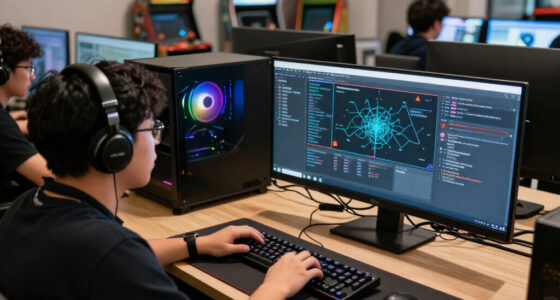
The software analyzes a video or link, transcribes speech, detects scene changes, reads on-screen text, and identifies visual elements—such as products or charts—on the user’s hardware. It then aligns this data to generate assets like SEO-friendly titles, descriptions, social media snippets, and clips, all processed locally. This process is designed to be fast, with layered progress indicators allowing creators to review assets as they are generated.
Compared to cloud-based workflows, this local approach eliminates dependence on internet speed, reduces recurring costs, and enhances data privacy. Most creators can run the system on a mid-range desktop with a good CPU, ample RAM, and a capable GPU, with processing times under 10 minutes per video. Hardware costs are upfront, but over time, they can result in significant savings—especially for creators producing large volumes of content—by avoiding monthly cloud fees.
Advantages of Offline Asset Generation for Creators
This shift to local processing fundamentally changes content creation workflows by offering faster turnaround times, greater control over assets and data, and substantial cost savings. For creators handling sensitive content or seeking to avoid ongoing cloud fees, this approach provides a compelling alternative. It also democratizes access to AI-powered content automation, requiring only standard desktop hardware rather than expensive cloud subscriptions.
Popular right now

Apple AirPods Pro 3 Wireless Earbuds with Active Noise Cancellation

Bose QuietComfort Wireless Noise-Cancelling Headphones, Moonlight Grey

Ninja Creami Scoop & Swirl Ice Cream Maker – Bone & Champagne (Amazon Exclusive)
As an affiliate, we earn on qualifying purchases.
Rise of Local AI Tools in Content Creation
Recent developments in AI-assisted content production have largely focused on cloud-based solutions, which offer convenience but come with privacy concerns and ongoing costs. The new local-first approach reflects a broader trend toward on-device AI processing, driven by improvements in hardware and AI models. This move aligns with creator demands for faster, more private workflows and reduces reliance on third-party servers, especially as content volume increases.
“This new system transforms a single video into a comprehensive publishing suite, all processed on your own hardware, without sacrificing speed or privacy.”
— Thorsten Meyer, AI developer
Unanswered Questions About System Capabilities
It is not yet clear how well the system performs with very large or complex videos, or how customizable the generated assets are beyond initial templates. Details about specific hardware requirements for optimal performance and the extent of AI customization remain to be fully disclosed. Additionally, the long-term stability and updates of the software are still developing.
Next Steps for Adoption and Development
Developers plan to expand compatibility with more hardware configurations and improve AI accuracy for diverse content types. Industry observers expect increased adoption among independent creators and small teams, with future updates potentially adding more automation features. Further integration with existing editing tools and platforms is also anticipated.
Key Questions
Can this system handle large or complex videos?
The system is designed for typical content sizes, but performance with very large or complex videos may vary depending on hardware specs. More details are expected as the software matures.
What hardware do I need to run this offline publishing kit?
A mid-range desktop with at least an Intel i7 processor, 16GB RAM, and a dedicated GPU like an RTX 3060 is sufficient for processing most videos in under 10 minutes. Upgrading storage to an NVMe SSD can improve speed.
Is this system suitable for professional content creators?
Yes, especially for those prioritizing privacy, cost-efficiency, and workflow speed. It can handle multiple assets and large volumes, making it suitable for professional use.
How does the cost compare to cloud-based solutions?
Initial hardware investment around $1,500 can be offset by avoiding monthly cloud fees, which can total $600 or more annually. Over time, this makes the local workflow more cost-effective.
Will this system improve over time?
Developers plan to enhance AI accuracy, expand features, and improve user control, making the system increasingly versatile and reliable.
Source: ThorstenMeyerAI.com