📊 Full opportunity report: Acoustic Dampening, Placement, and the “Rig in the Closet” Setup on ThorstenMeyerAI.com — validation score, market gap, and execution plan.
TL;DR
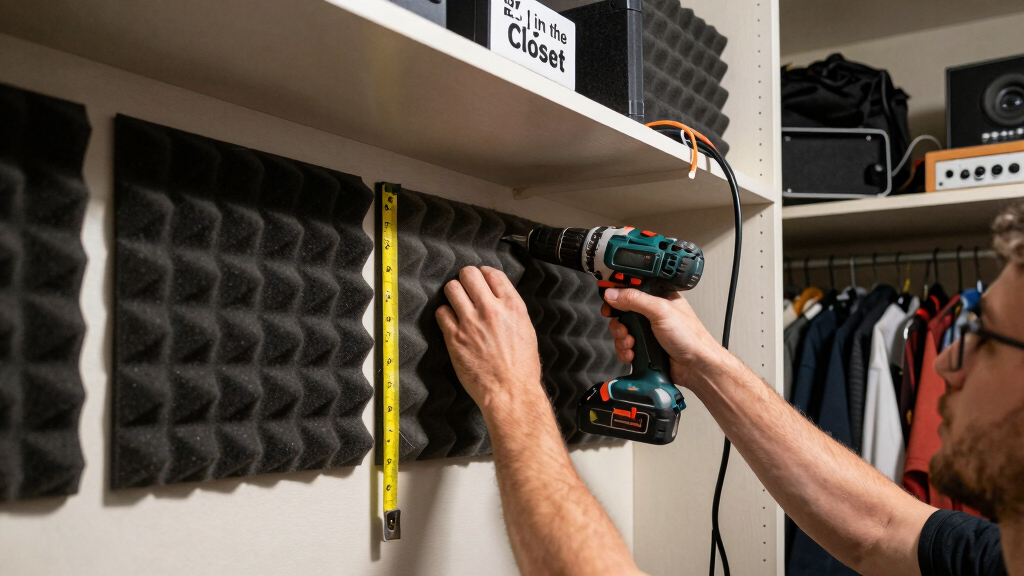
This article explores proven methods to reduce noise from high-power AI workstations. Key strategies include relocating the rig, using proper ventilation in enclosed spaces, and understanding the limits of acoustic foam. The ‘rig in the closet’ setup can be effective if heat management is addressed.
Putting a high-power AI workstation in a closet or cabinet can significantly reduce noise, but only if proper ventilation is maintained; this is a proven, effective strategy for quiet operation.
Experts emphasize that the most effective way to reduce noise is to move the rig away from the workspace, such as into another room or closet, leveraging network connectivity to operate remotely. This approach eliminates the need for complex acoustic treatments and is particularly suitable for AI workstations, which are often operated headless.
The ‘rig in the closet’ setup is popular for noise reduction but requires careful heat management. Learn more about acoustic dampening, placement, and the ‘rig in the closet’ setup. Sealing a machine in an enclosed space without ventilation causes heat buildup, which can lead to thermal throttling and increased fan noise. Proper airflow, via passive vents or active exhaust fans, is essential to prevent overheating while maintaining noise containment.
Acoustic foam and barriers are less effective for airborne and structure-borne noise transmission than moving the rig or providing ventilation. Mechanical decoupling, such as rubber feet or anti-vibration pads, can also significantly reduce low-frequency hums transmitted through solid surfaces.
Acoustic dampening
& the rig in the closet.
The most powerful noise fix isn’t a material — it’s a floor plan. A rig you can’t hear because it’s in another room beats any amount of foam. Tap the approaches in Part 1 to see what actually works.
(another room)
(levers 1–4)
(door / barrier)
(acoustic foam)
Contain the noise, not the heat
Impact of Placement and Ventilation Strategies on Noise Reduction
Understanding and implementing effective placement and ventilation strategies can dramatically improve the acoustic environment of AI workstations. Moving the rig out of the workspace can eliminate noise entirely, while proper ventilation in enclosed spaces prevents overheating and maintains system performance. These methods are crucial for users who require quiet workspaces without sacrificing computational power.
For organizations and individuals, adopting these techniques can enhance productivity, reduce noise pollution, and extend hardware lifespan by preventing thermal stress. The 'rig in the closet' approach, when done correctly, balances noise containment with thermal management, making it a practical solution for dedicated AI workloads.

Focusound 52 Pack Acoustic Foam Panels 1" x 12" x 12" Sound Proof Foam Panles Soundproofing Noise Cancelling Wedge Panels for Home Office Recoding Studio with 300PCS Double-Side Adhesive
- Soundproofing Design: Triangular grooves for noise absorption
- Includes Adhesive Tape: 300pcs double-sided adhesive for easy installation
- Easy Shape Recovery: Soak in water to restore foam shape
As an affiliate, we earn on qualifying purchases.
As an affiliate, we earn on qualifying purchases.
Best Practices for Noise and Heat Management in AI Rigs
Traditional noise mitigation methods focus on acoustic foam and barriers, which are often ineffective for airborne or structure-borne noise. Moving the rig to a different room or building has long been recognized as the most effective noise reduction method, especially for high-power AI hardware. See this guide on acoustic dampening and setup options.
The 'rig in the closet' concept has gained popularity as a compromise solution, offering significant noise reduction while maintaining system performance through proper ventilation. Experts warn that sealing a machine without adequate airflow leads to heat buildup, which can cause thermal throttling and increased fan noise, negating the benefits of enclosure.
Recent advancements include purpose-built soundproof cabinets with integrated cooling systems, combining acoustic treatment with thermal management. For more details, check out our article on acoustic dampening and the 'rig in the closet' setup. These solutions are more costly but provide a controlled environment for high-performance hardware, ensuring both quiet operation and reliable cooling.
"The most effective noise reduction strategy is simply moving the rig into another room and operating it headless. Acoustic foam and barriers only address reflections and airborne noise, not the core issue."
— Thorsten Meyer, AI hardware expert
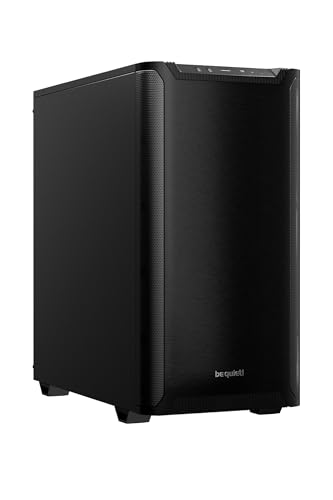
be quiet! Pure Base 501 Black ATX Case | 2 Preinstalled Pure Wings 3 140mm PWM Fans | Optimized Air Pressure | Compact PC Case | Vertical GPU Installation | USB 3.2 Gen. 2 Type C | BG073
- Minimalist Design: Clean, distraction-free appearance
- Optimized Airflow: Includes two PWM 140mm fans
- Quiet Operation: Reduces turbulence and noise
As an affiliate, we earn on qualifying purchases.
As an affiliate, we earn on qualifying purchases.
Unresolved Challenges in Enclosed AI Rig Setups
While the principles of heat and noise management are well-understood, specific implementations vary based on hardware, room configuration, and budget. The optimal balance between noise containment and thermal dissipation remains a challenge, especially in small or poorly ventilated spaces. The effectiveness of advanced soundproof cabinets with integrated cooling is promising but not universally standardized, and costs can be prohibitive for some users. Further research and development are needed to refine these solutions for broader adoption.

HP OmniDesk M03 Business AI PC Desktop, Intel Ultra 5 225, Win 11 H
- AI-Optimized Business Performance: Powered by Intel Core Ultra 5 225 processor
- Fast Memory and Storage: 32GB DDR5 RAM and 1TB PCIe SSD
- Versatile Connectivity Options: Supports Wi-Fi 6, Bluetooth 5.4, multiple ports
As an affiliate, we earn on qualifying purchases.
As an affiliate, we earn on qualifying purchases.
Next Steps for Noise and Heat Optimization in AI Workstations
Users should prioritize relocating their AI rigs to separate rooms or closets with proper ventilation. For those requiring enclosed setups, investing in purpose-built soundproof cabinets with active cooling is advisable. Ongoing innovations in thermal management and acoustic treatment are expected to make these solutions more affordable and accessible. Future developments may include smarter airflow systems and integrated noise-canceling technology to further improve the quiet operation of high-performance AI hardware.

Anti Vibration Pads, 2"× 2"×7/8" Vibration Isolator Pads, Mechanical Vibration Damping Pads, Heavy Duty Rubber Isolation Pads, 3/8"Pre-Drill Hole Vibration Isolator Pad for Air Compressor
- Noise and Vibration Reduction: Effective noise cancellation and vibration isolation
- Wide Application: Suitable for various heavy machinery
- Outdoor Use Recommended: Can be used outdoors after airing
As an affiliate, we earn on qualifying purchases.
As an affiliate, we earn on qualifying purchases.
Key Questions
Is it safe to put my AI workstation in a closet?
Yes, but only if it is properly ventilated with active or passive airflow systems to prevent overheating and thermal throttling.
Can acoustic foam alone significantly reduce noise from a high-power GPU?
No, acoustic foam mainly reduces reflections and echo within a room; it does not block airborne or structure-borne noise effectively.
What are the best ways to ventilate a closet containing a high-power AI rig?
Use a combination of passive vents and quiet exhaust fans, ideally with temperature-controlled airflow to manage heat without increasing noise levels.
Are purpose-built soundproof cabinets worth the investment?
For high-performance, continuous workloads, these cabinets can effectively contain noise while providing adequate cooling, making them a worthwhile investment for dedicated setups.
What is the most cost-effective way to reduce noise from my AI workstation?
The most affordable method is relocating the rig to another room or closet with proper ventilation, combined with mechanical decoupling to reduce vibrations.
Source: ThorstenMeyerAI.com