
📊 Full opportunity report: The SSD Squeeze: Why Storage Joined The Party on ThorstenMeyerAI.com — validation score, market gap, and execution plan.
TL;DR
Storage, particularly SSDs, is experiencing a significant price increase in 2026 due to supply shortages. AI’s growing storage needs and wafer competition with high-margin memory are key factors. Buyers face higher costs and supply delays across sectors.
Storage prices are rising sharply in 2026, with enterprise SSD contract prices jumping over 50% in a single quarter, and consumer drives doubling or tripling in cost. This surge is driven by a combination of supply shortages and increased demand from artificial intelligence applications, affecting markets worldwide.
Data storage components, especially NAND flash used in SSDs, are experiencing unprecedented price hikes in 2026. Contract prices for enterprise SSDs have increased by approximately 55% in early 2026, with manufacturers like SanDisk raising prices for their 3D NAND products. The overall NAND market revenue is forecasted to grow over 100% this year, reflecting intense demand.
This shortage results from two main factors: first, NAND production shares the same fabrication facilities as high-margin HBM and DRAM memory, leading to competition for limited wafer capacity. Second, the rise of generative AI has created a new, substantial demand for storage. High-end AI GPUs require upwards of 16TB of flash memory, and AI inference workloads demand extensive, high-speed storage solutions, pushing the market beyond previous capacity levels.
Manufacturers like Samsung, SK Hynix, and Micron have scaled back wafer targets or limited supply, citing the profitability of scarcity and the lengthy timeline—two to three years—for building new fabs. Industry insiders note that most of the current price increase is due to both genuine shortages and deliberate supply discipline, with some companies prioritizing higher-margin enterprise and AI-related products over retail markets.
The SSD squeeze: storage joined the party
Storage was the last cheap thing in computing. Not anymore — a 2TB NVMe that was $120–150 in 2024 now lists at $300–480. And this time flash isn’t only collateral damage: AI eats storage directly.
both ways
Flash got hit twice — once as collateral sharing fabs with HBM, once directly as AI inference turned fast storage into something it consumes by the petabyte. That second force won’t fade; it grows with every model, every RAG pipeline, every cache that must live somewhere fast. Buy what you need now; favor TLC with DRAM cache, don’t overpay for Gen 5, watch for counterfeits. Relief isn’t forecast before late 2027. When the cheapest component in computing has a two-year waitlist, “commodity” no longer fits. Next: The High-End PC & Workstation Tax.
Impacts of NAND Shortage on Markets and Tech Development
The rising storage costs and supply constraints are influencing the broader technology sector. Enterprise data centers, hyperscalers, and AI developers are experiencing increased operational costs and longer lead times, which could impact the deployment of new AI models and cloud services. Consumers are also affected, with higher prices for SSDs and limited storage options in new PC models. This scarcity may lead to innovations in storage technology and could influence the pace of AI development, while also posing challenges related to supply chain management and cost increases across the industry.
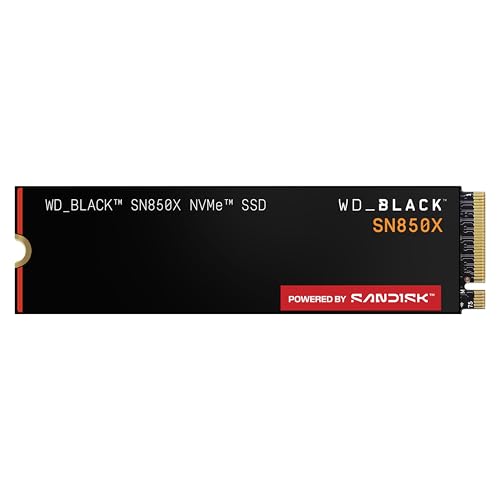
WD_BLACK SN850X 2TB NVMe SSD – M.2 2280, Up to 7,300 MB/s Read speeds, Up to 6,300 MB/s write speeds, Gaming Expansion, High Performance Internal Solid State Drive – WDS200T2X0E
- Maximum Read Speed: Up to 7,300 MB/s
- Maximum Write Speed: Up to 6,300 MB/s
- Storage Capacity: 2TB for high storage needs
As an affiliate, we earn on qualifying purchases.
As an affiliate, we earn on qualifying purchases.
Historical Trends and Current Market Dynamics
Historically, storage components, particularly SSDs, experienced steady price declines, making them relatively affordable. However, recent demand for high-capacity and high-performance NAND has increased significantly, driven by enterprise and consumer needs. The 2026 memory shortage reflects a shift in industry dynamics, with companies like Samsung and SK Hynix intentionally limiting wafer production to maintain higher margins amid rising demand. This situation is reminiscent of earlier shortages in DRAM, but the current situation is intensified by AI’s specific storage requirements and the competition among high-margin memory types for fabrication capacity.
Prior to 2026, NAND prices were relatively stable with gradual declines. The recent spike is a result of structural shifts in demand and strategic supply management by key manufacturers, who are prioritizing profit margins over capacity expansion at this time.
“Our focus remains on high-margin products, and we are adjusting wafer targets accordingly to meet market needs while maintaining profitability.”
— Samsung spokesperson

Carbon Fiber Solid State Drive Organizer Compatible with Samsung SSD T7/T9, SSD Holder Organizer Stand, Vertical Space-Saving Solid State Drive Storage with Non-Slip Base
- Space-Saving Vertical Design: Maximizes desk space and reduces clutter
- Carbon Fiber Construction: Lightweight, durable, and sleek material
- Universal Compatibility: Fits T5, T7, T9 SSDs and holds 6 drives
As an affiliate, we earn on qualifying purchases.
As an affiliate, we earn on qualifying purchases.
Extent of Price Increase and Future Supply Outlook
While current data confirms notable price increases and supply constraints, the duration of these shortages remains uncertain. The timeline for new fabrication facilities to become operational and sufficiently increase capacity is variable, and industry insiders suggest that supply discipline may persist through 2026. The development cycle for new fabs is lengthy, which could influence the pace of market stabilization.
As an affiliate, we earn on qualifying purchases.
Industry Responses and Potential Market Stabilization Strategies
Manufacturers are expected to continue prioritizing high-margin enterprise and AI storage solutions, which could result in delayed or limited availability of consumer SSDs and capacity upgrades. Investments in new fabrication facilities are underway but are projected to take several years to impact supply levels. Buyers should consider strategic purchasing and inventory management to navigate ongoing higher prices and potential delays. Monitoring industry capacity expansion plans and market signals will be important in assessing future supply conditions.
As an affiliate, we earn on qualifying purchases.
Key Questions
Why are SSD prices rising so rapidly in 2026?
Prices are increasing primarily due to supply shortages caused by wafer competition among high-margin memory types and the substantial demand from AI applications, which require large storage capacities.
Will new manufacturing plants solve the NAND shortage?
Building new fabrication plants typically requires two to three years, so immediate relief is unlikely. Industry experts suggest that supply discipline by manufacturers will continue until additional capacity becomes available.
How does AI drive storage demand so significantly?
AI workloads, including training and inference, require large amounts of high-speed NAND flash for models, databases, and caches, leading to increased and sustained storage demand that exceeds previous growth patterns.
Are consumer SSDs affected more than enterprise storage?
While enterprise customers are experiencing immediate impacts, consumers are also seeing increased prices and limited options in new PC models due to supply rationing across sectors.
What should buyers do in this market?
Buy only what is necessary, prefer SSDs with TLC NAND and DRAM cache, avoid unnecessary upgrades, and purchase from reputable sources to reduce the risk of counterfeit products. Be prepared for higher prices and longer lead times for storage components.
Source: ThorstenMeyerAI.com