🔍 Read the full analysis: I Vibe-Coded A PDF Editor, Then Tackled The Hard Part: Reliability on ThorstenMeyerAI.com

Get movie nights delivered free with Prime
- Fast, free delivery on millions of items
- Prime Video, Amazon Music and more included
- Member-only deals all year
TL;DR
Thorsten Meyer says an AI coding agent produced the first working version of his private PDF editor, Docestra, on Nov. 6, 2026. In six days of testing and revisions, he reports finding and addressing problems involving saved markups, encrypted files and redaction; the tool remains private, and its claimed benefits have not been measured for time or cost.
Thorsten Meyer says an AI coding agent built the first working version of his PDF editor, Docestra, in one day, but testing real documents exposed problems that took six more days to address. In an account published Nov. 13, he says revisions through version 1.5.1 addressed a save bug, limits on editing encrypted files and shortcomings in an early redaction design. The private tool is not available to download, and Meyer says he has not measured whether it saves time or money.
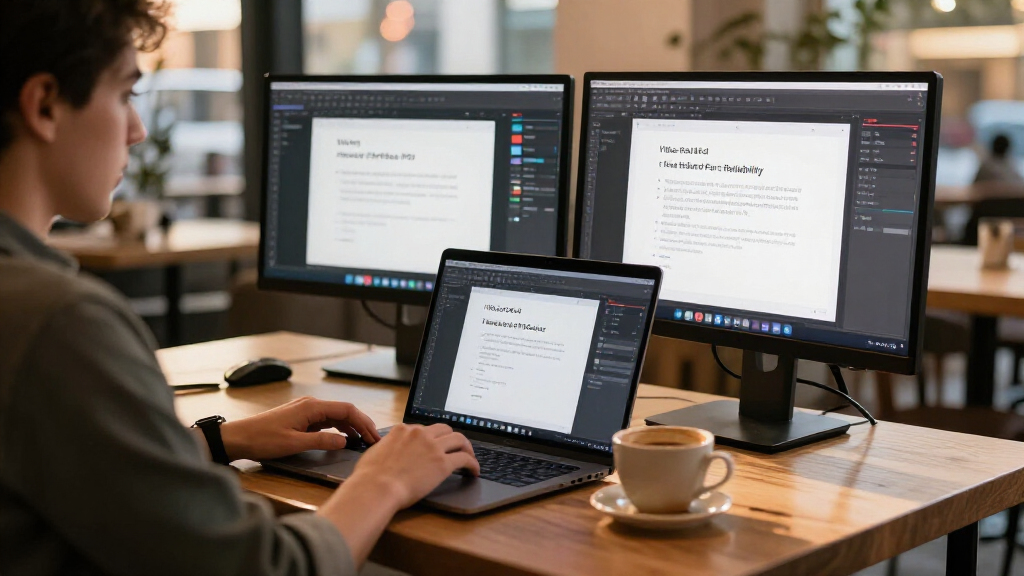
Meyer says he gave an AI coding agent a one-sentence brief on Nov. 6, 2026: build an Acrobat-like editor he could use. The first working version was committed at 21:47 Central European Time that evening. It could open PDFs, add highlights, drawings, notes and signatures, fill forms, reorder pages and save edited files. The local TypeScript web app runs in a browser on Meyer’s Mac, and he says documents remain on that machine.
The first version appeared to work on the files used to try it, but a robustness run across 930 real PDFs found a save problem, Meyer writes. For a file produced by a common PDF generator, the library could create a broken cross-reference table, causing markups to disappear from the saved document. He says he changed the save method to avoid compressed object streams.
Testing also exposed a complication with encrypted PDFs. Meyer reports that 52 of 69 encrypted files in his test set did not allow annotations under restrictions set by their authors, and that the editing library could not re-encrypt files after changes. He says Docestra was changed to ask users to confirm before unlocking such a file, then save an unprotected copy without overwriting the original. According to his account, all 69 test files then unlocked.
Redaction required a larger redesign. The version-one “white-out” tool covered material visually but left the underlying text in the PDF. Meyer says an independent AI review identified 14 problems in the first review round and 13 in the second for an initial content-removal approach. He abandoned that design in favor of converting pages with redactions into images, covering the marked areas in the pixels and adding a searchable text layer that excludes lines touching a redaction. A test over 917 PDFs found zero leaks, he reports. Those figures describe his own tests; the article does not provide an independent audit.
Docestra · Nov 6–13, 2026
From one prompt to a tool I can rely on
What the first version gave me, what real files broke, and what it took to fix it, from my project log.
What the tool rests on (schematic)
Built bottom up. The top layer is a plan, not a finished feature.
What happened, by date
- Nov 6One-sentence brief; first working version committed the same evening
- Nov 6Test over 930 real PDFs finds a save bug that dropped markups
- Nov 752 of 69 encrypted PDFs forbid annotations: unlock only into a new copy
- Nov 8Real redaction: review finds 14, then 13 problems; simpler design, 0 leaks in 917 PDFs
- Nov 12Version 1.5.1: 745 unit tests, 32 browser test suites
- Nov 13Version 2.0 starts: one shared PDF engine for our AI agents (in development)
Source: Docestra project records (development log, plans for versions 1 and 2.0, commit history), Nov 6–13, 2026. The layer stack is a schematic, not a measurement.
Graphic: Powered by Thorsten Meyer AI
Why Real-File Testing Changed Docestra
The account illustrates the distance between a software prototype that works in a demonstration and one that can safely handle documents people rely on. A save defect can silently remove work; encryption behavior can expose protected material; and a visual cover-up can leave sensitive text recoverable. These are not cosmetic issues for a PDF editor used on contracts, forms or records.
Meyer says the work included choices about how the tool should behave, not just code fixes. For encrypted files, he chose an explicit confirmation and an unprotected copy rather than silently saving without protection or replacing the original. For redaction, repeated review findings led him to replace the initial approach rather than keep patching it. The decisions matter because users need to know what an editor actually changes and what it preserves.
He also reports that the project’s automated unit tests grew from 17 in the first version to 745 in version 1.5.1. That is evidence of added testing within this project, not proof that the application is secure or reliable across all documents. Meyer says he has not measured time or cost savings, so the account does not establish that AI-assisted development was more efficient overall.
Popular right now

Apple AirPods Pro 3 Wireless Earbuds with Active Noise Cancellation

KitchenAid Artisan 5-Quart Tilt-Head Stand Mixer, Almond Cream

Hisense 75-Inch U7 Mini-LED ULED 4K UHD Smart Google TV (75U7SG)
As an affiliate, we earn on qualifying purchases.
From One-Day Prototype to Version 1.5.1
Meyer defines “vibe coding” as building software largely by describing desired behavior to an AI model in plain language and letting it write the code. He says Anthropic’s Claude Code, running Claude Opus, wrote Docestra’s code, while OpenAI’s Codex reviewed it from the start. The first version included viewing, searching, annotations, form filling, page operations, combining and extracting pages, printing, undo and saving.
Development moved from version 1 on Nov. 6 to version 1.5.1 on Nov. 12, according to Meyer. He says the PDF viewer library includes fonts under GPL-2.0, which he chose not to ship because his project rules exclude GPL code. For later text recognition and editing features, he says he reviewed the licences of bundled libraries before adding them. His notes, he says, record testing and rework taking longer than building for several packages.
Docestra remains a personal, private tool rather than a public product. Meyer says version 2.0 has been in development since Nov. 13 and is not finished. The account is a developer’s report of his own process and test results, not a published independent evaluation of the application.
“My conclusion: vibe coding gets you a working tool quickly. Turning it into a tool you can rely on is the real work.”
— Thorsten Meyer
Limits of Meyer’s Test Results
The reported test results come from Meyer’s own development process. His account does not name the 930- and 917-file test collections in enough detail to establish how representative they are, nor does it include an independent reproduction of the findings. The reported zero leaks applies to the redaction test he describes; it does not establish that every redaction in every PDF will be safe.
It is also unclear how the editor performs across other operating systems, browsers, PDF generators and document types. Docestra is not publicly downloadable, so outside users cannot currently assess its behavior. Meyer says the application keeps files on his Mac, but the account does not provide a third-party privacy or security audit. Version 2.0 remains unfinished, and no time or cost comparison is available.
Version 2.0 Remains in Development
Meyer says work on Docestra version 2.0 began on Nov. 13, 2026, the date of his account, and that it is not finished. He has not provided a release date or said that the editor will become publicly available.
For now, the next evidence will come from further development and testing. The account does not specify a planned external review, a broader release or additional test milestones. Readers should treat the reported results as Meyer’s description of a private project, rather than as a general guarantee about AI-built PDF software.
Key Questions
What is Docestra?
Docestra is a private PDF editor that Thorsten Meyer says he built with AI coding agents for use on his Mac. It supports document viewing, annotations, forms and page editing, among other features.
What problems did testing uncover?
Meyer reports a save defect that caused markups to disappear in some files, restrictions affecting annotations on encrypted PDFs, and an early redaction tool that covered text without removing it.
Did the redaction test prove Docestra is leak-proof?
No. Meyer says a test over 917 real PDFs found zero leaks with the redesigned method. That is a result from his test set, not proof that redaction is safe for every document or an independent security audit.
Can the public download Docestra?
No. Meyer describes it as a private tool and says it is not available to download.
Has Meyer shown that vibe coding saved time or money?
No. Meyer says he has not measured time or cost savings. He also reports that testing and rework took longer than building for several packages.
Source: ThorstenMeyerAI.com