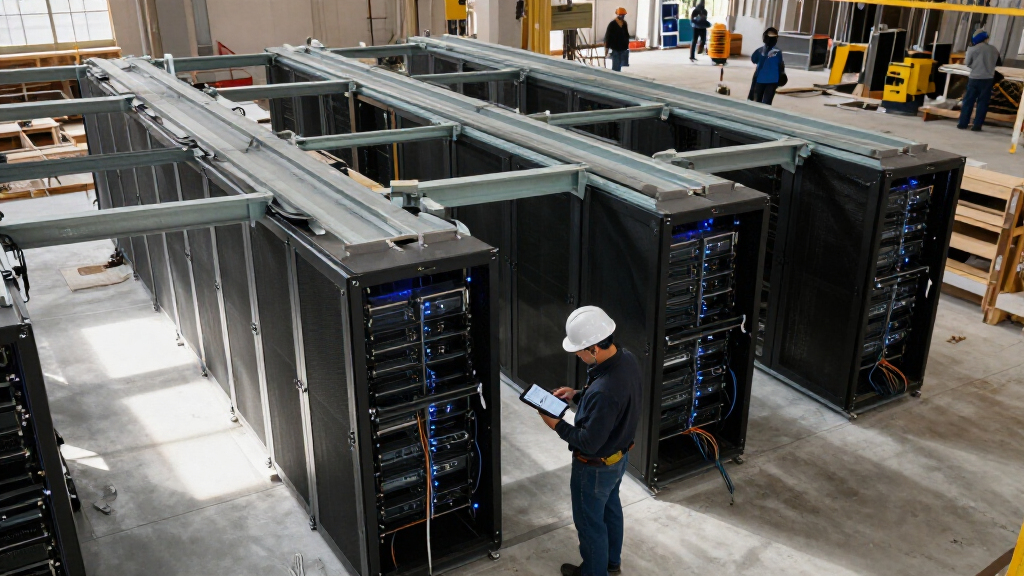

🔍 Read the full analysis: Trump Wants To Halt US Firms Building AI Data Centres Abroad, But A Threat Isn’t A Rule on ThorstenMeyerAI.com

Get movie nights delivered free with Prime
- Fast, free delivery on millions of items
- Prime Video, Amazon Music and more included
- Member-only deals all year
TL;DR
President Donald Trump said U.S. companies should not build data centers abroad and threatened a “tremendous tax” if they do. As of 08:00 UTC on November 21, no presidential action or regulation implementing the proposal had appeared in the official record, and its legal path remains unclear.
President Donald Trump said Friday that the United States would not allow American companies to build data centers abroad, then said they could do so but would face a “tremendous tax.” As of 08:00 UTC Saturday, no executive order, regulation or other presidential action putting the proposal into effect was listed in the official records reviewed by ThorstenMeyerAI.com, so companies’ immediate obligations had not changed on the basis of the remarks alone.
Trump made the comments at a White House news conference on November 20, after returning from a trip to Asia. The Verge published a transcript of the relevant exchange. Trump said: “We’re not going to allow our companies to build data centers outside of our country.” He then added: “If they do that, they can, but we’re going to put a tremendous tax on them.” The remarks did not specify a tax rate, start date, legal authority or which companies and countries would be covered.
Trump also said his staff had not previously heard the proposal from him: “I haven’t even said that to my people, but I’m telling them now.” That statement offers no evidence of a developed policy plan. The source account reports that Trump mentioned China and Finland; Newsweek said it was not immediately clear whether his reference to a Finnish project meant Google’s planned investment there, which Trump had criticized days earlier on Truth Social.
ThorstenMeyerAI.com reported that the White House presidential actions page listed two items dated November 20—one concerning National Adoption Month and another on federal contracting—but no action on overseas data centers. Its review of Federal Register entries and the forthcoming public inspection list also found no such rule. Newsweek reported that the White House referred it back to Trump’s remarks when asked for further details. These checks describe the public record at the time of publication; they do not establish what the administration may do later.
A Threat Without an Immediate Rule
The comments matter to U.S. cloud and AI companies because data centers are costly, long-lived infrastructure, and firms plan their locations around access to power, customers, networks and legal certainty. A tax or restriction on overseas construction, if adopted, could affect investment decisions and international expansion. But the remarks alone do not establish that any company must stop a project or pay a new charge.
The uncertainty is especially relevant for businesses already building, leasing or operating facilities overseas. Trump’s wording shifted between a prohibition—“not going to allow”—and permission subject to a tax. Those approaches would have different practical and legal effects. He did not explain whether the proposal would apply to existing projects, leased capacity, cloud services or only new construction. For now, companies cannot infer those details from the public comments.
The distinction also matters for customers and partners that depend on overseas computing capacity. A future policy could change where U.S. companies build or provide services, but the remarks do not establish that capacity will be withdrawn or that prices will rise. The immediate development is a publicly stated threat, not an announced change in operating requirements.
Popular right now

Dyson Cyclone V10 Origin Cordless Vacuum

Shark HydroVac MessMaster Wet Dry Vacuum & Mop Combo (AW261)

Vitamix Propel Series 510 Professional-Grade Blender, Black
As an affiliate, we earn on qualifying purchases.
Existing Chip Controls Differ
The source account identifies several possible routes for turning the proposal into policy, each with a different legal basis. A new federal tax would face the constitutional allocation of taxing power: Article I, Section 8 gives Congress the power to lay and collect taxes. The Verge noted that enactment could be difficult, particularly with a new Democratic-majority Congress expected to be sworn in within a couple of months, according to the source material.
A tariff is not a settled shortcut. The account says the Supreme Court ruled on February 20, 2026, in *Learning Resources v. Trump*, that the International Emergency Economic Powers Act does not authorize the president to impose tariffs. That decision limits reliance on IEEPA for this purpose, although the remarks did not identify any statute or legal mechanism for the threatened charge. Other routes, including action through Congress or Commerce Department authorities, would require their own legal basis and details.
There are already separate policies affecting advanced AI hardware and data centers. According to the source account, a Commerce Department rule effective November 19 requires licences for advanced AI chips in five countries and covers data centers serving China-headquartered companies at scale, with a reporting process for U.S.-headquartered companies. The account also cites a July 2025 executive order stating U.S. policy to support global deployment of U.S.-origin AI technologies, including data centers. Those measures are distinct from Trump’s new remarks and do not themselves create the threatened tax on overseas construction.
“The White House referred Newsweek to Trump’s remarks when asked for further details about the proposal.”
— The White House, as reported by Newsweek
The remarks did not identify which companies or countries would be affected, or whether the proposal would reach projects already under way. It is also unclear whether Trump meant only construction owned by U.S. firms, or whether leasing foreign facilities and purchasing overseas cloud capacity would count. No tax rate, timetable, exemptions or enforcement process was provided.
There is also no published legal instrument establishing the proposal, and the White House supplied no further details to Newsweek, according to the source account. The report’s review of official records reflects the position as of 08:00 UTC on November 21; the status could change if the administration issues a later announcement. The source material does not establish that any company has received an order to halt construction.
Watch for a Formal Policy Step
The next clear sign of a policy change would be a formal proposal, such as legislation, an executive action or a regulation from the relevant agency. Any such step would need to specify its legal authority, scope, timing and treatment of existing projects. The source account does not report a scheduled announcement or a deadline for administration officials to act.
Until more information is published, the confirmed development remains Trump’s statement at the news conference and the absence of an implementing measure in the records checked by the source. Companies and customers will need to distinguish any subsequent official action from political remarks, and assess its terms once they are available.
Key Questions
Did Trump formally ban U.S. companies from building data centers abroad?
No formal ban was listed in the White House or Federal Register records reviewed by ThorstenMeyerAI.com as of 08:00 UTC on November 21. Trump made the statement publicly, but the source account found no implementing order or rule.
Did Trump announce a tax rate or start date?
No. He called the potential charge a “tremendous tax” but gave no rate, start date, legal basis or implementation details.
Would a new tax require Congress?
The source account says a new federal tax would face Congress’s constitutional power to lay and collect taxes. It does not establish what legal route the administration might pursue for the proposal.
Are there already U.S. rules affecting overseas AI data centers?
Yes, but they are separate measures. The source account describes a Commerce Department rule effective November 19 covering licences for certain advanced AI chips and data centers serving China-headquartered companies at scale. It does not say that this rule creates a general tax or ban on U.S. firms building abroad.
Was Trump referring to Google’s planned Finland investment?
That has not been confirmed. Newsweek said it was not immediately clear whether Trump’s Finland reference meant Google’s planned investment, which he had criticized days earlier on Truth Social.
Source: ThorstenMeyerAI.com