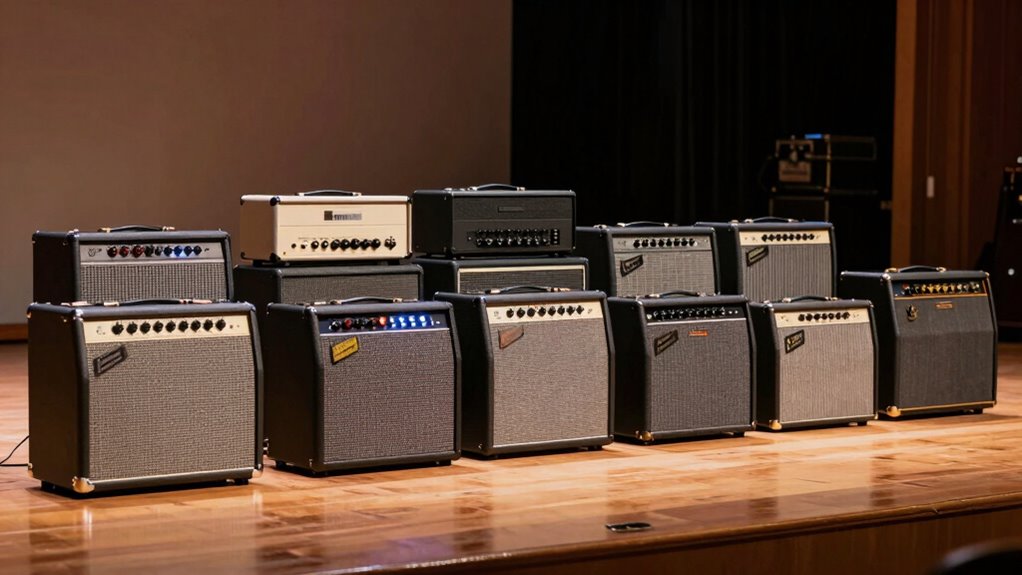
The right guitar amp depends on one honest question: where will you actually play it? For most players, the BOSS Katana-50 Gen 3 is the best overall choice because its 50 watts and onboard effects cover practice, recording, and small gigs without extra pedals. If budget is the priority, the Fender Frontman 10G delivers genuine Fender clean tone for under entry-level pricing, while the Fender Mustang LT25 is the smarter pick for beginners who want built-in amp modeling and presets. The core tradeoff in this category is simple: cheap 20-watt practice amps keep costs low but limit your tone options, while mid-priced modeling amps like the Katana and Mustang cost more upfront and grow with you. I ranked these nine amps by tone quality, versatility, build, and real-world value. Keep reading for the full breakdown of which amp earns your money.

Get movie-night favorites delivered free — and shop member deals
- Fast, free delivery on millions of items
- Access to Prime Big Deal Days deals on October 6–7
- Prime Video, Amazon Music and more included
Complete the kit


Key Takeaways
- The BOSS Katana-50 Gen 3 won best overall because it is the only amp here with enough power for band practice and live use, plus USB recording and effects that eliminate the need for a pedalboard.
- Fender dominates this lineup with six of nine spots, but the two Frontman 20G variants are nearly identical — your color choice matters more than the specs, so buy whichever is cheaper.
- Every 20-watt amp in this comparison (Frontman 20G, portable practice amp, Leo Jaymz) is a bedroom-only tool; none will keep up with a drummer, so don’t overspend expecting gig capability.
- The Mustang LT25 and Champion II 25 split the beginner vote: the Mustang wins on presets and ease of use, while the Champion II 25 wins on simple, authentic tube-style tone with a USB output.
- Stepping up from the Champion II 25 to the Champion II 50 doubles your wattage and adds a second channel for roughly the price of a budget pedal — the best value-per-dollar jump in the entire lineup.


| guitar amp | Speaker | Channels |
|---|---|---|
| Electric Guitar Amplifier 20 W | — | — |
| Fender Frontman 20G Electric G | 8 inches | Clean + switchable Drive |
| BOSS Katana-50 Gen 3 Guitar Am | — | 1 |
| Fender Champion II 25 Watt Ele | — | — |
| Fender Champion II 50-Watt Ele | 12 inch | 2 |
| Fender Frontman 20G Electric G | Fender Special Design speaker | Clean + switchable Drive |
| Leo Jaymz 20W Electric Guitar | — | Clean and Distortion |
| Fender Mustang LT25 Guitar Amp | 8 inches | — |
| Fender Frontman 10G Electric G | 6-inch Fender Special Design | — |
More Details on Our Top Picks
Electric Guitar Amplifier 20 Watt Portable Practice Amp with Headphone Input and Noise Reduction Cable
This 20-watt practice amp stands out for its lightweight, durable design that makes it ideal for travel, street performances, and home practice. Compared to larger models like the Fender Champion II 50-Watt, it offers less power but excels in portability and simplicity. Its single-channel setup and basic tone controls mean it’s best for beginners or players who prioritize mobility over complex features. While it lacks built-in effects or Bluetooth, its multiple inputs and noise reduction cable provide clear, versatile sound for practice and small gigs. The limited feature set means professional musicians seeking advanced tone shaping might find it insufficient. Perfect for beginners or traveling players who need a reliable, compact amp.
Pros:- Powerful 20-watt sound suitable for various small performances
- Multiple input options including headphone and auxiliary inputs
- Lightweight at just 6.2 pounds for easy transport
Cons:- Limited to 1 channel, restricting complex setups
- Basic features without built-in effects or Bluetooth connectivity
Best for: Beginners and musicians who need a portable practice amp for home, travel, or street use.
Not ideal for: Professional performers or recording artists who require advanced effects, multiple channels, or higher power for larger venues.
- Compatible Devices:Guitar, phone
- Output Wattage:20 watts
- Number of Bands:3
- Speaker Size:6.5 inches
- Power Source:Corded Electric
- Weight:6.2 pounds
Our verdict“This amp suits beginners or mobile musicians seeking a simple, portable practice solution.”
Fender Frontman 20G Electric Guitar Amplifier, 20-Watt, 8″ Speaker
The Fender Frontman 20G offers a straightforward, user-friendly layout with an 8-inch speaker that delivers clear tone for practice and small gigs. It features a clean channel and a switchable Drive channel, providing some distortion options that make it more flexible than basic practice amps. Its auxiliary input and headphone jack enable silent practice and jam-alongs, making it ideal for beginners and intermediate players. Compared with the Fender Champion II 25-Watt, it offers slightly less power but maintains a compact footprint, perfect for limited spaces. Its basic feature set and absence of onboard effects mean it might not satisfy players seeking complex tone shaping or recording capabilities. Best for players who want reliable tone and simple controls for practice or small performances.
Pros:- Simple, intuitive controls suitable for beginners
- Switchable Drive channel adds distortion flexibility
- Aux input and headphone jack for silent practice
Cons:- Limited to 20 watts, restricting use at larger venues
- Basic feature set without built-in effects for tone customization
Best for: Beginner or intermediate guitarists looking for an easy-to-use, versatile practice amp.
Not ideal for: Gigging musicians needing high volume, advanced effects, or recording features for large venues.
- Power:20 watts
- Speaker:8 inches
- Dimensions:10 x 16 x 16 inches
- Channels:Clean + switchable Drive
- EQ:3-band
- Aux Input:1/8 inch
Our verdict“An ideal choice for beginners and players seeking straightforward, versatile practice with Fender quality.”
BOSS Katana-50 Gen 3 Guitar Amplifier, 50-Watt Combo Amp
The BOSS Katana-50 Gen 3 distinguishes itself with a 50-watt power output and a 12-inch speaker that delivers stage-ready sound. Its six amp characters, including the newly developed Pushed type, along with five effects sections, make it highly adaptable for various genres and playing styles. The amp’s enhanced Tube Logic technology offers expressive tone, feel, and response—ideal for players who want a range of sound options from clean to high-gain. Its compatibility with the BOSS Tone Studio app provides extensive remote editing and customization, making it perfect for those wanting deep tone control. Compared to the Fender Champion II 50-Watt, it offers more effects and amp character variety but comes with a higher price and complexity. This amp is best suited for intermediate to advanced players seeking a versatile, feature-rich stage amplifier.
Pros:- Twelve versatile amp characters for a wide sound palette
- Advanced effects including Booster, Mod, Delay, and Reverb
- Remote editing via BOSS Tone Studio for deep customization
Cons:- Heavier at 25.6 pounds, less portable for travel
- More complex interface may intimidate beginners
Best for: Intermediate or advanced guitarists who want a wide array of tones and effects for gigging and recording.
Not ideal for: Beginners or players who prefer simple controls and minimal setup for casual practice.
- Output Wattage:50 watts
- Speaker Size:12 inches
- Channels:1
- Effects:Multiple including Delay, Reverb
- Connectivity:3.5mm Jack, USB
- Amplifier Type:Class AB
Our verdict“This amp excels for players who want extensive tone shaping and effects for live performances and recordings.”
Fender Champion II 25 Watt Electric Guitar Combo Amp, Speaker, USB & Aux
The Fender Champion II 25-Watt amp offers a compact, affordable solution for practice and small gigs. Its 8-inch Fender-designed speaker provides authentic Fender tone, while the built-in effects suite—including Reverb, Delay, Chorus, Tremolo, and Vibratone—allows for creative sound shaping. Its versatile connectivity options, including auxiliary input, headphone jack, and USB port, make it suitable for silent practice, recording, or jamming along with external devices. Compared to the Fender Frontman 20G, it provides more effects and a slightly higher wattage, making it a better choice for players wanting more tonal options without a significant size increase. Its limited power and basic features mean it’s less suited for larger venues or professional stage use. Ideal for beginners, home practice, and small performances.
Pros:- Built-in multi-effects suite for diverse tones
- Compact size fits easily into small spaces
- USB port for recording directly to computers
Cons:- Limited to 25 watts, not suitable for large venues
- Basic channel design without multiple channels
Best for: Beginner and intermediate players seeking an affordable, feature-packed practice amp.
Not ideal for: Gigging musicians needing high volume or advanced effects for large venues.
Our verdict“A versatile and affordable amp perfect for practice, recording, and small gigs for beginners and hobbyists.”
Fender Champion II 50-Watt Electric Guitar Amplifier, 2-Channel Combo Amp
The Fender Champion II 50-Watt offers a substantial power output with a 12-inch Fender speaker, making it suitable for both practice and small to medium gigs. Its two-channel design provides clean and overdrive/distorted tones, complemented by a broad array of effects including Reverb, Delay, Chorus, Tremolo, and Vibratone—ideal for exploring different genres. Its USB port also supports recording, appealing to home musicians and performers who want to capture their sound. Compared with the BOSS Katana-50, it has a more traditional Fender tone and simpler interface, but fewer amp character options. Its size, at nearly 20 inches deep, requires ample space and portability might be less convenient. Best for players who need a reliable, versatile amp for practice and small performances.
Pros:- Two channels for versatile clean and overdrive tones
- Multiple onboard effects for creative sound design
- USB recording capability
Cons:- Relatively large size requiring space
- Limited to 50 watts, less suitable for large venues
Best for: Practice and performance-oriented players who value multiple effects and two channels for tonal variety.
Not ideal for: Travelers or solo performers seeking lighter, more portable equipment.
- Power:50 watts
- Speaker:12 inch
- Dimensions:19.8 x 19.8 x 11.5 inches
- Channels:2
- Effects:Reverb, Delay, Chorus, Tremolo
- Warranty:2 years
Our verdict“This amp offers versatile tone shaping and effects for practice and small gigs, ideal for dedicated performers.”
Fender Frontman 20G Electric Guitar Amp with Special Design Speaker, Red
The Frontman 20G hits a sweet spot that most budget amps miss: enough wattage to keep up with a drummer friend, but simple enough that a first-time player won’t get lost in menus. Compared with the Fender Frontman 10G, the step up to 20 watts and a larger speaker gives noticeably fuller low-end and clean headroom, which matters the moment you play anything other than solo practice. The separate Drive channel with its own volume control is a genuine upgrade over single-channel rivals like the Leo Jaymz 20W, letting you toggle between clean and dirty tones instantly rather than reshaping the gain knob every time. The tradeoff is that this is a traditional analog amp — no presets, no effects, no Bluetooth, unlike the Mustang LT25. You’re buying straightforward tone, not versatility.
Pros:- Separate switchable Drive channel with its own volume for instant clean-to-dirty switching
- 20 watts with an 8-inch speaker is loud enough for small jams, not just solo practice
- Headphone jack and aux input make silent practice and jamming along easy
- 2-year Fender warranty and proven reliability
Cons:- No built-in effects, presets, or Bluetooth — tone options are limited to two channels and EQ
- Solid-state distortion sounds thin and buzzy at high gain settings compared with modeling amps
Best for: Beginner and intermediate players who want a simple, loud practice amp with genuine overdrive and trusted Fender build quality under $100
Not ideal for: Players who want built-in effects and tonal variety — a modeling amp like the Mustang LT25 covers far more ground at a similar price
- Power Output:20 watts
- Speaker:Fender Special Design speaker
- Channels:Clean + switchable Drive
- EQ:3-band
- Inputs/Outputs:1/8-inch aux in, headphone jack
- Weight:15.8 lbs
- Warranty:2-year limited
Our verdict“The smartest pick if you want a straightforward amp that will outgrow the absolute-beginner stage without outgrowing your bedroom.”
Leo Jaymz 20W Electric Guitar Amplifier, 6.5-inch, Black
At its price point, the Leo Jaymz 20W covers the basics: dual channels, 3-band EQ, and an aux input for playing along with backing tracks. Where it earns its spot is cost — it undercuts the Fender Frontman 20G while matching it on paper with the same wattage class and EQ flexibility. But the gap shows in execution. The 6.5-inch speaker is a size smaller than Fender’s 8-inch, so clean tones flatten out and lows disappear when you push the volume. There’s also no headphone jack mentioned, which the Frontman and the Frontman 10G both include — a real issue for apartment players who need silent practice. This model makes the most sense as a first amp or a beater you can leave at a rehearsal space or toss in a car without worrying about it.
Pros:- Very low price for a true two-channel amp with 3-band EQ
- Lightweight and portable with a comfortable carrying handle
- Enough volume for bedroom practice and small get-togethers
- AUX/CD input for jamming along with tracks
Cons:- 6.5-inch speaker produces thin, boxy tone compared with the 8-inch speakers in the Fender lineup
- No headphone output for silent practice
- Build quality and component longevity are a step below established brands
Best for: Absolute beginners, parents buying a first amp, or players wanting a cheap secondary amp for casual practice
Not ideal for: Anyone who cares about tone depth or needs silent practice — the small speaker and lack of a headphone jack are hard limits
- Power:20W
- Speaker Size:6.5 inches
- Channels:Clean and Distortion
- Equalization:3-band
- Inputs:CD Line, AUX 6.5mm
- Input Voltage:110-130V, 50/60Hz
- Color:Black
Our verdict“A serviceable starter amp at a rock-bottom price, but spend a little more on the Frontman 20G if tone matters to you.”
Fender Mustang LT25 Guitar Amplifier, 25-Watt Combo Amp with 8″ Speaker
The Mustang LT25 takes a completely different approach from the Frontman 20G: instead of two raw channels, it gives you 30 preset tones spanning cleans, crunch, and high-gain sounds, all navigable through a color display that removes the guesswork of dialing in effects. For a new player still figuring out what style they even like, that variety is more valuable than the Frontman’s marginally simpler knob layout. The 25 watts and 8-inch speaker put it in the same loudness class as the Frontman 20G, so you’re not sacrificing volume for features. The catch: presets are a starting point, not a destination. Editing is shallower than on bigger Mustang models, and tone snobs will eventually hit the ceiling of a budget modeling amp. Compared with the Leo Jaymz 20W, though, it’s simply a different league of flexibility.
Pros:- 30 preset tones cover a huge range of genres without extra gear
- Color display and simple interface make tone selection genuinely beginner-friendly
- Bluetooth connectivity for streaming and app control
- Same 8-inch speaker class and volume as more expensive practice amps
Cons:- Preset editing is limited compared with larger Mustang models
- Modeling tone quality flattens at high volume and won’t satisfy experienced players
- Menu-based control is slower than physical knobs for quick tweaks
Best for: New players who want to explore many genres and effects without buying pedals, and who value guided tone selection
Not ideal for: Gigging musicians or tone purists — 25 watts of solid-state modeling won’t hold up on a stage or satisfy players chasing refined analog character
- Power:25 watts
- Speaker:8 inches
- Presets:30 built-in tones
- Connectivity:Bluetooth
- Dimensions:12.75 x 14.5 x 8.25 inches
- Warranty:2 years
Our verdict“The best first amp for explorers — it trades a little analog simplicity for a whole library of sounds a beginner can grow into.”
Fender Frontman 10G Electric Guitar Amplifier, 10-Watt, Black/Silver
Sometimes the brief is just small, cheap, and good enough, and the Frontman 10G delivers exactly that. At 11.7 pounds and roughly the footprint of a lunchbox, it’s the most portable real amp in this lineup — easier to stash in a dorm or carry to a friend’s place than the Frontman 20G, and far more durable than the generic Leo Jaymz 20W. The closed-back cabinet is a thoughtful touch at this price, tightening bass response in a way open-back budget amps rarely manage, and the gain-plus-overdrive-switch layout gives beginners their first taste of crunch without complications. Be realistic about the ceiling, though: 10 watts through a 6-inch speaker means it starts straining once you want real volume. It also lacks the aux and preset features that make the Mustang LT25 more engaging. This pick makes the most sense as a pure first amp or travel spare.
Pros:- Extremely compact and lightweight at 11.7 pounds
- Closed-back cabinet delivers tighter bass than typical open-back budget amps
- Gain, overdrive switch, and 2-band EQ give real tonal control for the price
- Fender brand reliability with a 2-year limited warranty
Cons:- 10 watts through a 6-inch speaker runs out of headroom quickly
- No effects, presets, or Bluetooth — strictly a plug-in-and-play box
- Smaller speaker makes tones sound thin next to 8-inch models like the Frontman 20G
Best for: First-time guitarists, kids, and travelers who need a tiny, reliable practice amp from a trusted brand
Not ideal for: Anyone jamming with others or wanting room to grow — the power and speaker size cap it at solo bedroom use
- Power Output:10 watts
- Speaker:6-inch Fender Special Design
- Controls:Gain, over-drive select switch, volume, treble, bass
- Cabinet Design:Closed-back
- Dimensions:7.5H x 11.5W x 13.7D inches
- Weight:11.7 pounds
- Warranty:2-year limited
- Color:Black/Silver
Our verdict“The right cheap amp if small and dependable are the priorities — just plan to upgrade once you’re playing with other people.”
How We Picked
I evaluated each amp against four criteria that actually matter to buyers at these price points: tone quality at realistic volume (how the amp sounds in a bedroom or small room, not on a spec sheet), versatility (channels, effects, amp models, and I/O like headphone jacks, aux inputs, and USB), build quality and reliability (Fender and BOSS have long service histories here), and value relative to intended use — a $60 amp that does its one job well ranks above a $200 amp used at 10% of its capability.
The ranking logic follows use case more than price. The Katana-50 Gen 3 earns the top spot because it is the only amp with headroom for live playing and recording. The Champion II models and Mustang LT25 fill the middle tier for players who want features that grow with them. The budget 20-watt trio ranks lower not because they sound bad, but because their ceiling is low — fine first amps, but ones players typically outgrow within a year or two.
Factors to Consider When Choosing Guitar Amps
Before picking a specific amp, it helps to understand the decisions that shape every purchase in this category. These six factors separate the amp you keep for years from the one you sell at a loss.Wattage: Buy for Volume You’ll Actually Use
The most common mistake new buyers make is equating wattage with quality. In reality, a 10-watt amp is plenty loud for apartment practice, and 20 watts covers a bedroom with room to spare — 50 watts is where band-with-a-drummer territory begins. Buying a 50-watt amp solely for quiet bedroom playing often produces worse tone than a small amp, because large amps sound thin and stiff at whisper volumes. A related trap: tube amps need volume to sound their best, while the solid-state and modeling amps in this lineup sound consistent at any level. Match the wattage to your loudest realistic scenario, not an imagined future stadium gig.
Speaker Size Shapes Your Tone More Than You Expect
Speaker size is the spec buyers overlook most, yet it defines your low-end response. The 6.5-inch speakers on budget amps sound boxy and thin compared with the 8-inch speakers on the Fender Frontman 20G and Mustang LT25, and the difference is audible even to untrained ears. Larger speakers move more air and reproduce bass frequencies that make chords sound full rather than nasal. If two amps share similar wattage and price, the one with the bigger speaker almost always sounds more satisfying. This is also why two 20-watt amps can sound completely different despite matching power ratings.
Modeling and Effects: Convenience Versus Character
Modern modeling amps like the Mustang LT25 and Katana-50 bundle dozens of amp voices and effects, which sounds like an obvious win — but there’s a real tradeoff. Modeling amps put a layer of menus between you and your tone, and some players spend more time scrolling presets than practicing. Traditional amps like the Frontman and Champion lines offer fewer sounds but faster access to each one with a simple knob turn. Beginners uncertain about their style benefit from modeling’s experimentation; players who already know they want classic clean or crunch tones waste money on features they’ll never touch. Decide which type of player you are before comparing spec lists.
Connectivity: Headphone Jacks, Aux In, and USB
A headphone jack is non-negotiable for apartment players — every amp in this lineup except the Frontman 10G is confirmed to have one, and that alone justifies the 10G’s lower rank for anyone sharing walls. The aux input lets you play along with backing tracks, which accelerates learning far more than solo practicing. USB output, found on the Champion II 25 and Katana-50, turns the amp into an audio interface for recording — a feature that saves you $100+ on separate recording gear if you have any interest in capturing your playing. Skip USB only if you are certain recording will never be part of your routine.
Upgrade Path: Will You Outgrow It?
Cheap practice amps have a hidden cost: the resale market is flooded with them, so a $60 amp you outgrow might resell for $25. The smarter financial play for committed beginners is buying one mid-tier amp that lasts through the learning curve, rather than buying budget twice. The Katana-50 and Champion II 50 hold value better because they serve real gigging roles, not just practice. That said, if you are genuinely unsure whether guitar will stick, the cheap-amp-then-upgrade path is rational — losing $35 on a flip is cheaper than a $300 amp gathering dust. Your honest commitment level should drive this decision more than any spec sheet.
Brand Reliability and the Near-Duplicate Trap
Fender appears six times in this lineup, which reflects genuine reliability and widespread service support rather than favoritism — but it also creates a duplicate-product trap. The Frontman 20G appears in two listings that differ only in color, and pricing between them can swing by $20 or more for identical sound. Similar overlaps exist across the Champion line at different wattages. My advice: once you’ve chosen a model family, compare every variant listing on price and color, not features, because the electronics are the same. Also check warranty terms — Fender and BOSS typically back their amps with longer coverage than no-name import brands, which matters for an item with speakers and circuit boards that can fail.
Frequently Asked Questions
Is a 20-watt amp loud enough to play with a band?
For most bands with an acoustic or restrained drummer, a good 20-watt solid-state amp can work for rehearsals, but it will be running near its maximum — which means thin tone and no headroom for clean playing at volume. The 20-watt amps in this lineup, like the Frontman 20G and Leo Jaymz, are designed as practice tools first, and their smaller speakers struggle to cut through a full mix. If band playing is even a possibility within a year, the Katana-50 Gen 3 or Champion II 50 are the safer buys. If you will only ever play at home, save the money — the extra wattage buys nothing you’ll use.
Should a beginner buy a modeling amp like the Mustang LT25 or a simple amp like the Frontman 20G?
It depends on how the beginner learns. Players who enjoy exploring sounds, want to mimic songs accurately, and don’t mind menus will get more from the Mustang LT25’s presets and amp models — it keeps practice interesting, which keeps beginners playing. Players who just want to plug in, turn two knobs, and hear a decent tone will find the Frontman 20G’s simplicity less frustrating. There’s also a durability angle: simpler amps have fewer components that can confuse or fail. As a general rule, younger beginners and tinkerers suit modeling amps, while adults who want a straightforward tool suit the simpler designs.
What’s the actual difference between the two Frontman 20G listings and the Frontman 10G?
The two Frontman 20G listings are the same amp in different finishes, so buy whichever is cheaper that day — the circuits, speaker, and sound are identical. The Frontman 10G is a genuinely different product: 10 watts instead of 20, and critically, it lacks the headphone output that the 20G has. That missing headphone jack is the 10G’s biggest limitation for anyone practicing in shared living spaces. The 10G also produces less clean headroom, so it distorts earlier when you turn up. Unless the price gap is significant, the 20G is the better long-term purchase.
Do I need USB output on a practice amp?
Only if recording or silent computer-based practice is in your plans. USB turns the amp into a one-cable recording interface, letting you capture ideas into free software like GarageBand without buying a separate audio interface — which typically costs $80 to $150 on its own. The Champion II 25 and Katana-50 Gen 3 both include it. If you never intend to record, USB is dead weight you’re partially paying for, and a simpler amp without it often sounds just as good for less money. One honest caution: players who think they might record someday usually do, so treat USB as cheap insurance if you’re on the fence.
Why does the Katana-50 cost so much more than the Fender amps — is it worth double?
The price gap reflects capability, not brand markup. The Katana-50 offers roughly four times the usable volume, five amp character types, over 60 built-in effects accessible through BOSS’s free software, power scaling for quiet playing, and USB recording — it effectively replaces an amp, a pedalboard, and an audio interface. For a player who would eventually buy those things separately, the Katana is actually the cheaper route. For a player who only practices at conversation volume with a clean tone, all of that capability goes unused, and the Frontman or Champion amps deliver 90% of the satisfaction at half the price. Worth it depends entirely on whether you’ll use the ceiling, not the ceiling itself.
Conclusion
Matching the right amp to the right buyer closes this decision quickly. Best overall goes to the BOSS Katana-50 Gen 3 — nothing else here covers practice, recording, and live volume in one box. Best value is the Fender Champion II 25, which balances real tone, USB recording, and gig-adjacent power at a mid-tier price. Best for beginners is the Fender Mustang LT25, whose presets make practice engaging without overwhelming a new player. Best premium pick (for players who want maximum headroom in this lineup) is the Champion II 50 and its second channel. Best budget pick is the Frontman 20G — preferably whichever of its two listings is cheaper — while the Frontman 10G suits absolute lowest-budget buyers, and the Leo Jaymz and portable 20-watt practice amp serve as ultra-basic spares or travel amps. Buy for the player you are today, with one honest eye on where you’ll be in a year, and none of these nine choices will disappoint.
Halloween Picks
halloween
As an affiliate, we earn on qualifying purchases.