🔍 Read the full analysis: How KIRIN EXPRESS Creates A Floating-Seam Journey Without Image Assets on ThorstenMeyerAI.com

Get movie nights delivered free with Prime
- Fast, free delivery on millions of items
- Prime Video, Amazon Music and more included
- Member-only deals all year
TL;DR
KIRIN EXPRESS is a fictional, AI-built web exhibition that presents a 603 km/h maglev journey using browser-drawn visuals rather than photographs or video. Its scroll-linked stations, interactive controls and motion safeguards make the train’s imagined 10-centimetre levitation gap both a visual theme and a navigation device.
KIRIN EXPRESS, a fictional maglev train imagined to travel at 603 km/h, is the subject of an AI-built web exhibition that creates its landscapes, vehicle and motion in the browser instead of using photographs or video. Described by ThorstenMeyerAI.com as room 129 of 175 in the original analysis, the project makes the train’s imagined 10-centimetre levitation gap the organising idea for both its visual design and its scroll-based journey.
The exhibition is a design concept, not a real rail service: the source explicitly says KIRIN EXPRESS is neither a rail operator nor a product from an actual company. Its central visual device is a luminous seam running through the page, accompanied by floating panels and cool, restrained shadows. The interface uses porcelain white and cool grey against deep indigo, with sakura pink reserved for small accents. Zen Kaku Gothic New is used for headings and main text, while IBM Plex Mono marks measurements, times and controls.
Instead of presenting the page as a conventional stack of sections, its JavaScript connects the visitor’s scroll position to a fictional station-to-station trip. The updateJourney() routine checks which station is nearest the centre of the viewport and adjusts blur and speed accordingly: the landscape softens between stops and sharpens as a station comes into focus. A canvas routine called drawSpeed() paints up to 72 horizontal motion lines, with their length and pace responding to scrolling.
The page also offers several controls tied to the imagined train. A departure console runs a 20-second sequence from platform preparation to levitation and acceleration, with one progress value driving both a circular instrument and a miniature train. Visitors can switch the polarity in a CSS-built guideway cross-section, trigger a pulse along the luminous seam and use a dusk slider to change the light and city view outside the train windows. The source says the animation pauses when the browser tab is hidden and is simplified for visitors who prefer reduced motion.
How KIRIN EXPRESS Creates a Floating-Seam Journey Without Image Assets
KIRIN EXPRESS is a fictional maglev journey imagined at 603 km/h. Its browser-drawn train, landscapes and instruments turn a 10-centimetre levitation gap into both a visual signature and a scroll-led wayfinding system.
How the Gap Shapes the Interface
The levitation gap carries the concept through the page. It appears as a luminous seam, informs the floating treatment of panels and gives the fictional trip a continuous visual thread.
A seam through the scene
A glowing line echoes the imagined space beneath the train, set against porcelain white, cool grey and deep indigo with restrained sakura-pink accents.
Panels that appear to float
Soft shadows and layered surfaces extend the levitation idea from the vehicle into the page’s information panels.
A world drawn in-browser
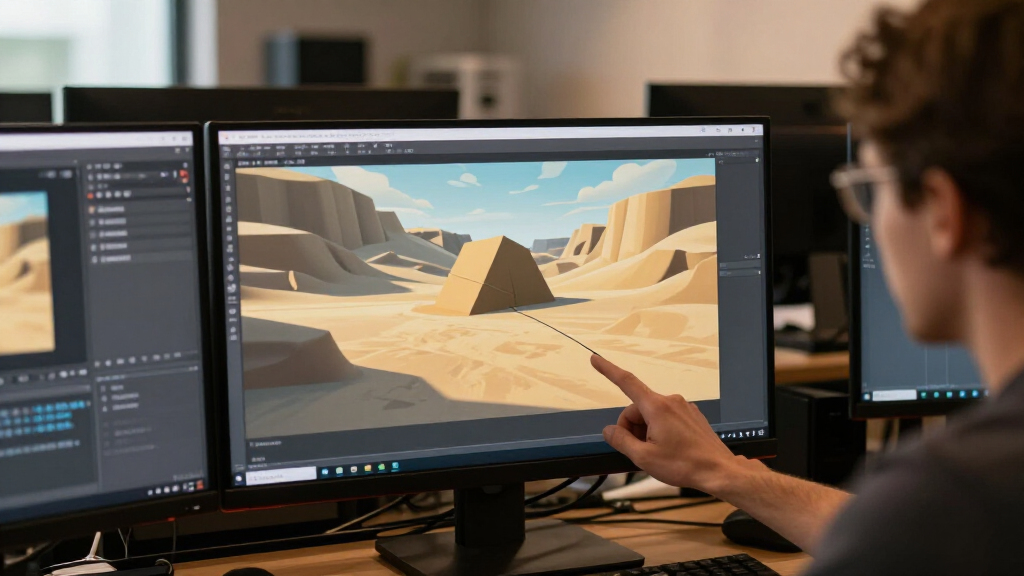
CSS, JavaScript and canvas create the described vehicle forms, scenery, instruments and motion without photographs or video.
“No photographs or video are used.”
ThorstenMeyerAI.com reportFrom Viewport Position to Station Focus
The exhibition connects scroll position to a fictional station-to-station trip. Its updateJourney() routine finds the station closest to the viewport centre, then changes landscape blur and motion speed as the visitor moves through the page.
Journey focus spectrum
The marker illustrates the reported focus shift. It is a conceptual diagram, not measured journey data.
Motion responds to scrolling
Canvas-drawn horizontal lines change length and pace with scrolling; bar lengths are illustrative.
A Departure Sequence You Can Explore
The report describes several controls that make the imagined train’s systems tangible through small, browser-built interactions.
A 20-second departure console begins with platform preparation.
One progress value drives both a circular instrument and a miniature train.
The sequence moves into acceleration as the imagined journey gets underway.
Polarity, seam pulse and dusk controls offer additional ways to inspect the scene.
What the Source Establishes
KIRIN EXPRESS is presented as a design concept, not an operating train or commercial rail service. The source describes the intended experience and its safeguards, while leaving implementation outcomes unverified.
Creative concept and reported features
A fictional Japanese intercity maglev line; an imagined speed of 603 km/h; browser-drawn visuals; scroll-linked station focus; departure and scene controls; pausing animation when a tab is hidden; and a reduced-motion treatment.
Performance, access and responsive results
The available account gives no browser test results, measured frame rates, accessibility audit or proof that all target layouts work. Brief goals include 390, 834 and 1,440-pixel screens, no horizontal overflow and tap targets of at least 44 pixels.
KIRIN EXPRESS, Clearly Explained
Is KIRIN EXPRESS a real train or operator?
No. It is described as a fictional maglev train and AI-built exhibition, not a real operator or commercial product.
How are the visuals made without image assets?
The report says CSS, JavaScript and canvas draw the vehicle forms, scenery, instruments and motion in the browser.
What does scrolling change?
The nearest station to the viewport centre guides the focus: landscapes soften between stops and sharpen as a station comes into view.
Has accessibility or performance been tested?
The source describes motion safeguards, but supplies no independent performance, accessibility or responsive test results.
How the Gap Shapes the Interface
The project shows how a single physical metaphor can organise both appearance and interaction. The levitation gap is not only a detail in the fictional train’s design: it becomes the page’s luminous seam, informs the floating treatment of panels and gives the journey a visual thread. That makes a technical premise legible to visitors without relying on documentary train photography.
Its asset-free approach is also a practical demonstration of how CSS, JavaScript and canvas can create a complete visual environment. The supplied account describes drawn vehicle forms, scenery, instruments and motion, but provides no independent performance measurements. It reports safeguards such as pausing animation in hidden tabs and offering a reduced-motion treatment; those details matter because animation is central to the experience, while visitors may have different device capabilities and accessibility needs.
As an affiliate, we earn on qualifying purchases.
A Fictional Train as Design Brief
The source presents KIRIN EXPRESS as one entry in a larger series of numbered rooms, calling it room 129 of 175. The brief casts it as a fictional Japanese intercity maglev line and assigns it a speed of 603 km/h. These are elements of the exhibition’s invented world, not claims about an operating train or a real timetable.
The described production process has three passes: build the experience around a physical rule, critique the result across layouts and interactions, then refine it through an art-director review. The accompanying design guide is said to explain the visual system, interaction logic, motion safeguards and asset-free approach. The source also includes a prompt intended for an AI coding agent, specifying a single-page HTML, CSS and JavaScript build with no frameworks, build step, external requests or image assets.
“The ten-centimetre gap beneath the train [is] the organising principle for the whole page.”
— ThorstenMeyerAI.com report
As an affiliate, we earn on qualifying purchases.
What the Source Does Not Verify
The available material is a description of a design showcase, not an independent technical audit. It does not provide browser tests, measured frame rates, accessibility test results or evidence that the page meets every target in the included build brief. The brief specifies goals such as support for screens at 390, 834 and 1,440 pixels wide, no horizontal overflow and tap targets of at least 44 pixels, but those requirements alone do not establish that they were achieved.
The source points readers to a live page and a design guide, but this account does not establish their present availability or give details about who built or evaluated the final implementation. The fictional train’s speed, stations and journey are creative elements; no real-world service, route or operational performance is described.
CSS JavaScript canvas drawing tools
As an affiliate, we earn on qualifying purchases.
As an affiliate, we earn on qualifying purchases.
Where to Inspect the Build
Readers can consult the live exhibition and its design guide, both referenced by the source, to inspect the page and its implementation notes. The guide is described as covering the visual system, interaction logic, motion safeguards and asset-free choices. The source does not announce a launch date, upcoming release or formal testing milestone, so any further development or independent evaluation remains unconfirmed.
As an affiliate, we earn on qualifying purchases.
Key Questions
Is KIRIN EXPRESS a real train or rail operator?
No. The source describes it as a fictional maglev train and AI-built exhibition piece, not a real operator or commercial product.
How does the page create its visuals without image assets?
The report says vehicle forms, scenery, instruments and motion are drawn in the browser. Its described tools include CSS, JavaScript and a canvas animation, rather than photographs or video.
What does scrolling do?
Scroll position changes the fictional journey’s visual focus. The page checks which station is nearest the viewport centre, then adjusts blur and speed so landscapes soften between stops and stations come into focus.
What interactive controls does the exhibition describe?
The reported controls include a 20-second departure sequence, a guideway polarity switch, a seam-pulse test and a dusk slider that changes the view outside the train windows.
Has the page’s performance or accessibility been independently verified?
The source describes reduced-motion and hidden-tab animation safeguards, but the material provided does not include independent test results for performance, accessibility or responsive layouts.
Source: ThorstenMeyerAI.com
Halloween Picks
halloween
As an affiliate, we earn on qualifying purchases.