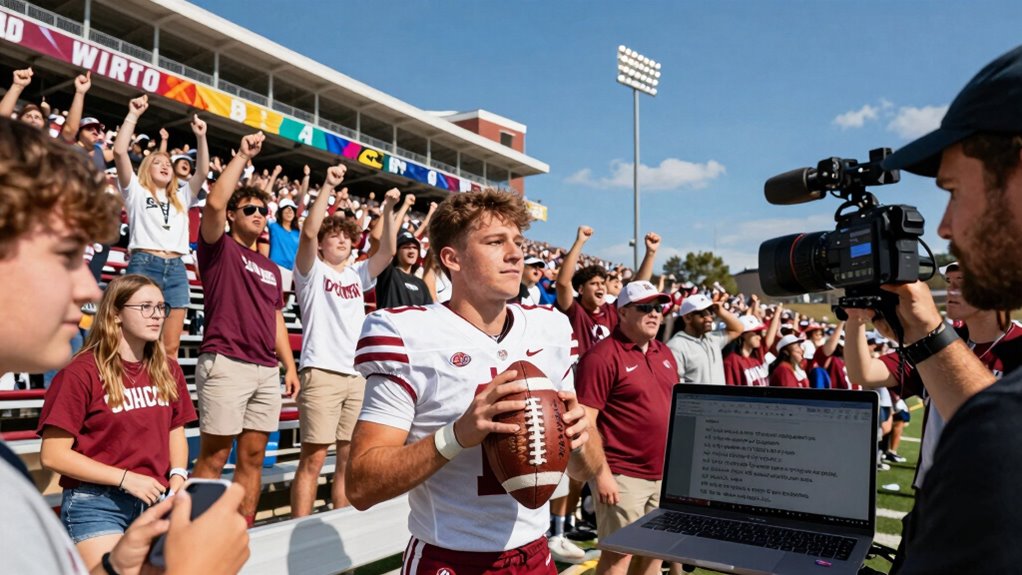

NIL has shifted the college sports conversation by changing how you see athlete value, emphasizing personal branding and earnings alongside athletic skills. You’ll notice recruitment now considers social media influence and NIL potential, making the process more strategic. Teams and schools must navigate evolving policies and manage athlete relationships differently. This shift pushes college sports toward a more professional environment, where branding plays a critical role. To uncover how these changes impact athletes and programs, keep exploring the details.

Get movie nights delivered free with Prime
- Fast, free delivery on millions of items
- Prime Video, Amazon Music and more included
- Member-only deals all year
Key Takeaways
- NIL allows athletes to monetize personal brands, shifting the focus from amateurism to earning potential.
- Recruiting strategies now prioritize marketability and social media influence alongside athletic talent.
- Regulations and policies around NIL are evolving, requiring programs to ensure compliance and fairness.
- Athlete earnings influence team dynamics, prompting new management and support strategies.
- NIL fosters a more professionalized college sports environment, transforming athlete development and program priorities.
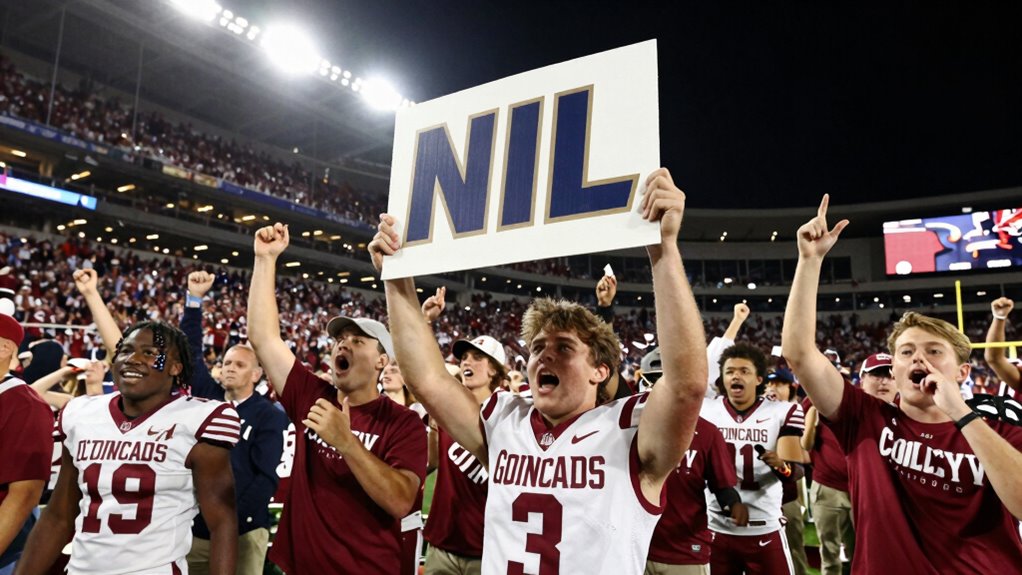
The landscape of college sports is rapidly changing thanks to Name, Image, and Likeness (NIL) rights. This shift transforms how athletes are viewed and valued, directly impacting athlete compensation and recruiting strategies. No longer are college athletes just amateurs competing for scholarships; they now have the opportunity to monetize their personal brands. This change empowers athletes to earn money from endorsements, social media promotions, and other ventures, which alters the traditional dynamics of college sports. As a result, programs must rethink their approach to recruiting. Coaches and recruiters now consider an athlete’s potential NIL value alongside athletic talent and academics. This has led to the emergence of multi-unit setups in college sports, where teams utilize multiple athletes’ NIL opportunities to bolster program success. This approach requires a nuanced understanding of NIL regulations, which are continually evolving and can vary by state and institution. This means finding athletes who not only excel on the field but also have a strong personal brand that can generate income. Your recruiting strategies are evolving to identify athletes with marketability and social media influence, recognizing that these qualities can be just as important as athletic prowess. Schools that adapt quickly gain a competitive edge in attracting top talent, especially when athletes see the financial benefits they can secure during college. These shifts also influence athlete compensation, making it a more complex landscape. Athletes now have avenues to earn money legally, which can impact team dynamics and locker room harmony. Some programs are offering resources or guidance to help athletes manage their NIL opportunities responsibly, but questions about fairness and compliance still linger. As a result, recruiting becomes more targeted, as you seek athletes who understand the responsibilities that come with monetization and can balance their academic and athletic commitments. The rise of NIL has also prompted schools to develop new policies and partnerships to support athlete branding efforts, further integrating NIL into the fabric of college sports. These changes aren’t just about individual earnings; they redefine the athlete-coach relationship and the role of college sports in student-athlete development. For you, this means staying informed about evolving regulations, understanding the value of a personal brand, and adapting your recruiting approach accordingly. It’s no longer enough to look solely at athletic ability; you need to evaluate how well an athlete can leverage NIL opportunities. This new era demands a strategic mindset, blending athletic scouting with marketing insight. As NIL continues to reshape college sports, your ability to navigate these changes will determine your success in recruiting and athlete management. To succeed in this environment, understanding the regulations and compliance landscape is crucial for both coaches and athletes alike. Recognizing the importance of personal branding can give you an edge in identifying athletes with marketability. Ultimately, this evolution fosters a more professionalized environment, where athlete compensation and branding play pivotal roles in shaping the future of college athletics.
As an affiliate, we earn on qualifying purchases.
Frequently Asked Questions
How Has NIL Impacted Recruiting Strategies Across Different College Sports?
You see NIL transforming recruiting strategies as athletes focus more on brand endorsements and social media strategies. Coaches now emphasize a player’s marketability, not just athletic skill, to attract top talent. You’ll notice recruitment pitches highlight potential endorsement opportunities and social media reach, making athletes more appealing if they can build a personal brand. This shift encourages athletes to develop their online presence, ultimately shaping how college programs evaluate and pursue recruits.
Are There Any Legal Restrictions on NIL Deals for College Athletes?
Yes, there are legal restrictions on NIL deals for college athletes. You can’t jeopardize your amateur status or scholarship eligibility by accepting certain deals. The NCAA and individual schools set rules to prevent athletes from earning money in ways that might be considered professional, which could threaten their amateur status. So, you need to guarantee NIL agreements adhere to these regulations to stay eligible and maintain your scholarships.
How Do NIL Policies Vary Between NCAA Divisions and Conferences?
NIL policies vary wildly, creating a wildfire of differences across NCAA divisions and conferences. You’ll find Division I often has stricter NIL regulations, aiming to balance athlete compensation with amateurism, while Division II and III tend to have more relaxed rules. Conference policies further complicate things, as some impose additional restrictions or guidelines. This patchwork of NIL regulations makes it challenging to navigate the landscape, impacting athletes’ earning opportunities and compliance strategies.
What Are the Long-Term Financial Implications for Student-Athletes?
You’ll likely see long-term financial benefits from NIL, but you need to prioritize athlete financial literacy to manage earnings wisely. Be aware of NIL tax implications, as earnings can affect your taxes and future financial planning. If you stay informed and develop strong financial habits early, you’ll set yourself up for sustained financial stability beyond college, turning NIL opportunities into lasting wealth rather than short-term gains.
How Does NIL Influence the Academic Priorities of College Athletes?
Do you think NIL influences your academic priorities? It can, as athlete motivation shifts toward balancing endorsements and coursework. You might find it challenging to uphold academic integrity when financial gains become part of your identity. The pressure to perform both academically and commercially may lead you to prioritize athletic success over education, risking your long-term goals. Staying focused on your studies guarantees you’re truly investing in your future beyond sports.
social media influencer starter pack
As an affiliate, we earn on qualifying purchases.
As an affiliate, we earn on qualifying purchases.
Conclusion
As NIL reshapes the college sports landscape, you can see it as a tidal wave rushing through the traditional calm, stirring new opportunities and challenges alike. This shift transforms the game from a pure passion to a lucrative arena, where athletes now hold more power and voice. It’s a turning point, like a spark igniting a fire, setting the stage for a future where fairness and fame collide—changing the college sports conversation forever.
college athlete endorsement guide
As an affiliate, we earn on qualifying purchases.
As an affiliate, we earn on qualifying purchases.
sports sponsorship branding tools
As an affiliate, we earn on qualifying purchases.
As an affiliate, we earn on qualifying purchases.
Halloween Picks
halloween
As an affiliate, we earn on qualifying purchases.