
TL;DR

Get movie nights delivered free with Prime
- Fast, free delivery on millions of items
- Prime Video, Amazon Music and more included
- Member-only deals all year
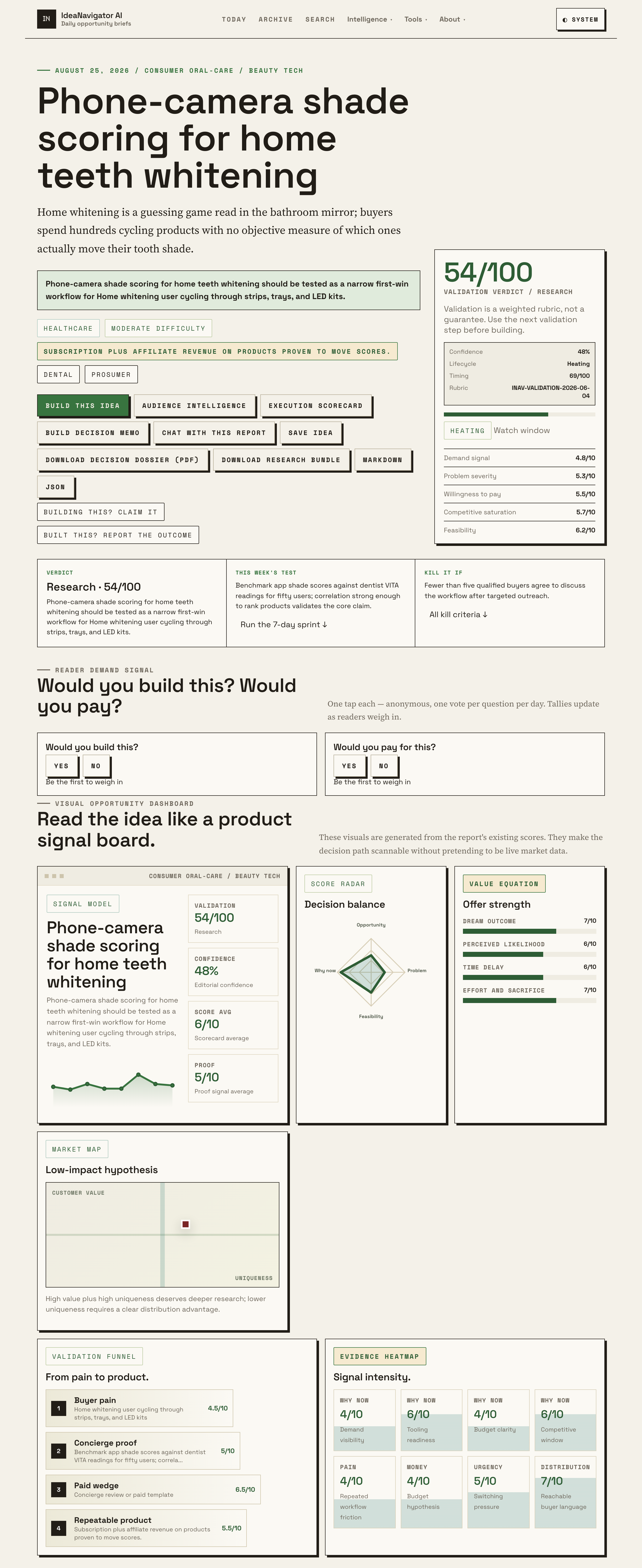
A new development in home teeth whitening involves using phone-camera shade scoring to objectively track progress. This technology could reduce guesswork and improve product effectiveness. Validation against dentist standards is underway, with potential for subscription-based revenue.
Phone-camera shade scoring for home teeth whitening is being developed as a tool to objectively measure whitening progress, aiming to replace subjective visual assessments. This innovation could significantly impact the consumer oral-care market by providing reliable feedback on product effectiveness, which has traditionally relied on guesswork and subjective judgment.
The technology involves a guided-lighting photo flow that captures images of teeth and compares the shade against a calibrated dental shade scale. This process produces a score that tracks whitening progress over time. According to sources from IdeaNavigator AI, the system is designed to plot these scores weekly, identify which products are effective, and offer personalized recommendations based on data from users with similar starting shades.
Developers plan to validate this approach by benchmarking app-generated shade scores against dentist VITA readings in a study involving fifty users. The goal is to establish a strong correlation to ensure the app’s measurements are reliable enough for consumer use. If successful, the technology could be integrated into subscription services, generating revenue through product recommendations and affiliate sales of whitening products proven to improve scores.
Transforming Home Whitening with Objective Measurement
This development matters because it addresses a longstanding challenge in the home whitening market: the lack of an objective, standardized way for consumers to gauge their progress. Currently, users rely on visual judgment in the mirror, which is subjective and inconsistent. Introducing phone-camera shade scoring could reduce product churn, improve user satisfaction, and foster more effective whitening routines. It also opens new revenue opportunities for companies offering personalized, data-driven oral care solutions.
As an affiliate, we earn on qualifying purchases.
Market Need and Technological Readiness
The home teeth whitening market has grown significantly, with consumers cycling through various products like strips, trays, and LED kits. However, without objective measurement tools, many users struggle to determine which products truly work for them, leading to frustration and wasted money. Recent advances in smartphone camera technology and guided-lighting systems have made it feasible to approximate dentist-level shade readings at home. This innovation aligns with broader trends toward personalized, tech-enabled health and beauty solutions.
While the concept is promising, it is still in the testing phase. The key challenge remains validating the accuracy of app-based shade scores compared to professional dental measurements. The initial study involving fifty participants aims to address this, with results expected to influence further development and market adoption.
“The goal is to create a reliable, user-friendly tool that can objectively track whitening progress and guide product choices.”
— an anonymous researcher
As an affiliate, we earn on qualifying purchases.
Validation and Consumer Adoption Uncertainties
It is not yet confirmed how accurately the app’s shade scores will correlate with dentist VITA readings across diverse user populations. The success of the validation study remains to be seen, and user acceptance of the technology will depend on ease of use and perceived reliability. Additionally, regulatory considerations and patent protections could influence how quickly this technology reaches the market.
As an affiliate, we earn on qualifying purchases.
Upcoming Validation Results and Market Rollout
The next step involves completing the validation study with fifty users, comparing app scores against professional dental measurements. If the results demonstrate a strong correlation, developers plan to refine the app’s algorithms and expand testing. A broader market launch could follow within the next 12 to 18 months, potentially accompanied by marketing campaigns emphasizing personalized, measurable whitening results.
As an affiliate, we earn on qualifying purchases.
Key Questions
How does the phone-camera shade scoring work?
The system uses guided lighting and a specialized app to capture images of teeth, then compares the shade against a calibrated dental scale to produce a score that tracks whitening progress over time.
Is this technology accurate enough to replace dentist assessments?
Validation studies are underway to determine how well the app’s scores correlate with professional measurements. Its accuracy will depend on the results of these tests.
Will this technology be available to consumers soon?
If validation proves successful, a broader market rollout could occur within 12 to 18 months, with ongoing improvements based on user feedback and data.
How will this impact the cost of home whitening products?
It could lead to more personalized product recommendations and subscription services, potentially increasing initial costs but improving overall effectiveness and user satisfaction.
Are there privacy concerns with using phone cameras for this purpose?
As with any health-related app, data privacy will be a key consideration, and developers will need to ensure secure handling of user images and data.
Source: IdeaNavigator AI
Halloween Picks
halloween
As an affiliate, we earn on qualifying purchases.