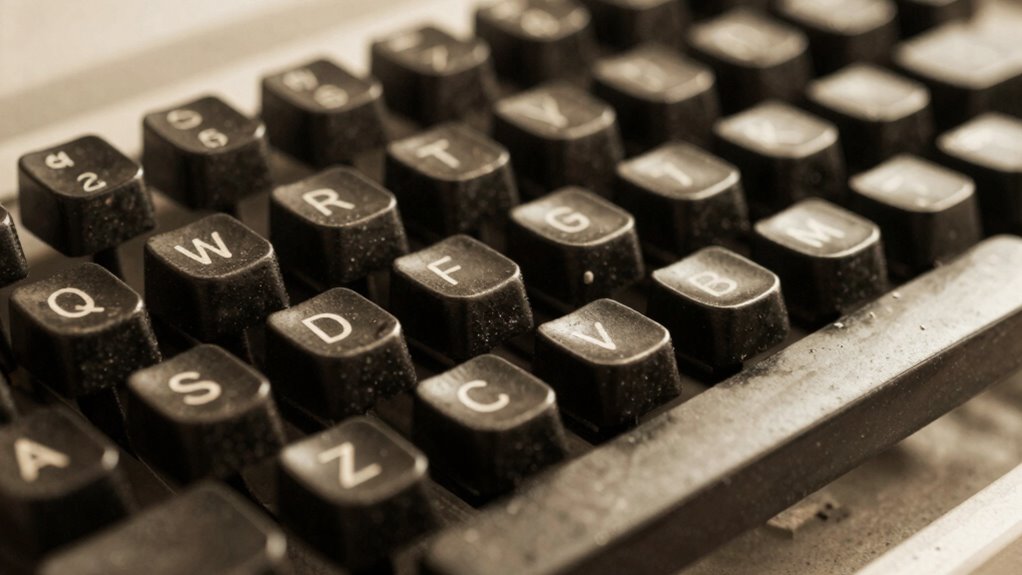

You might be surprised to learn that the QWERTY keyboard became the standard because it was quickly adopted in the 1870s and industry leaders like Remington made it widely available. Its design helped prevent jamming on early typewriters, and user familiarity created a strong network effect. Once people learned it, switching was tough because of habit and training. If you want to discover how its history shaped today’s technology, there’s more to uncover beyond this quick overview.

Get movie nights delivered free with Prime
- Fast, free delivery on millions of items
- Prime Video, Amazon Music and more included
- Member-only deals all year
Key Takeaways
- Developed in the 1870s to reduce typebar jamming, making it practical for early typewriters.
- Early adoption by the Remington company established it as the industry standard.
- Widespread familiarity and training created a network effect that reinforced its dominance.
- It became embedded in computer and mobile device hardware, ensuring continued use.
- Historical roots and resistance to change contributed to its long-term persistence and dominance.
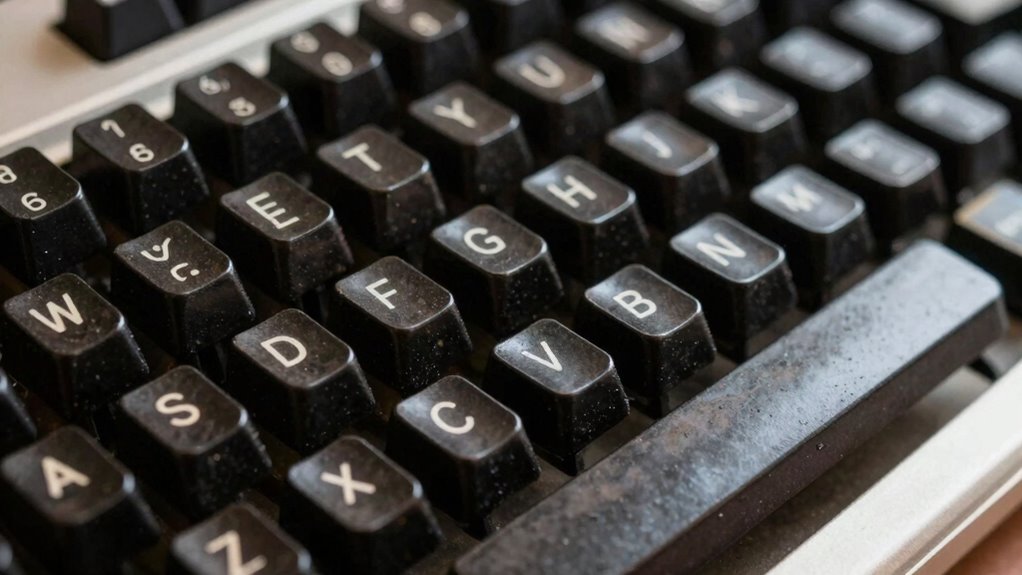
Have you ever wondered why the QWERTY keyboard remains the most popular layout today? It’s a question many people ask, especially as alternative layouts like Dvorak or Colemak gain attention. The answer lies in its historical origins and how it adapted to modern needs. When you look back, you’ll see that the QWERTY design was created in the 1870s by Christopher Latham Sholes, a newspaper editor and printer. His goal was to develop a typing system that minimized jamming on early typewriters, which was a real problem at the time. By arranging keys to prevent adjacent typebars from colliding during rapid typing, Sholes and his team set the foundation for what would become the standard. This practical solution became a game-changer, and despite the evolution of technology, the layout stuck.
QWERTY was designed in the 1870s to prevent typewriter jams, shaping keyboard history despite modern alternatives.
As you consider the importance of historical origins, you’ll realize that QWERTY’s dominance was solidified early on through widespread adoption. When the Remington company began manufacturing typewriters with the QWERTY layout in the 1880s, it quickly became the industry standard. This early lead meant that users, typists, and companies all invested in learning and building around this layout. Once the system was established, it created a network effect — the more people used it, the more valuable it became. Even when alternative arrangements proved to be more efficient, it was the legacy of early adoption that kept QWERTY at the forefront. Additionally, the historical development of the layout played a role in its durability and resilience against change. Furthermore, the design’s adaptability to modern technology has helped it remain relevant.
Moving into modern adaptations, you’ll see that the QWERTY layout has persisted because of familiarity and compatibility. Today, it’s embedded in everything from computer keyboards to mobile devices. Manufacturers design their hardware with QWERTY in mind because it’s what most users know. The layout has also adapted to new technologies, with ergonomic designs and split keyboards improving comfort without changing the layout’s fundamental structure. In addition, software and applications are optimized around QWERTY, ensuring seamless use across devices. Despite criticism about its efficiency, the fact remains that millions of people are trained on QWERTY, making any switch a significant hurdle. This widespread adoption, combined with ongoing innovations that keep the layout relevant, explains why QWERTY continues to dominate. Support Breakfast options like ergonomic designs and alternative layouts have also played a role in accommodating diverse needs.
In the end, the victory of the QWERTY keyboard isn’t just about technology but about history, habit, and adaptation. Its origins in solving early mechanical issues set the stage, and its modern adaptations ensure it stays practical for today’s fast-paced digital world. That’s how a layout designed over a century ago still rules the keyboard world today.
Popular right now

Dyson Car+Boat Cordless Handheld Vacuum

KitchenAid Artisan 5-Quart Tilt-Head Stand Mixer, Almond Cream

Dyson Ball Animal 2 Plus Corded Vacuum
As an affiliate, we earn on qualifying purchases.
Frequently Asked Questions
Who Invented the Original QWERTY Keyboard Layout?
You should know that Christopher Latham Sholes invented the original QWERTY keyboard layout in 1873. Designed with layout efficiency in mind, he aimed to reduce jamming in typewriters by spacing out commonly used letter pairs. Though not specifically ergonomic, this design prioritized faster typing and minimized mechanical issues. Over time, the layout’s efficiency helped it dominate, making it the standard for keyboards worldwide.
Were There Any Major Competitors to QWERTY?
Ironically, the main competitors to QWERTY focused on better keyboard ergonomics and typing efficiency, but none gained the same popularity. Dvorak and Colemak layouts, for example, offered improvements, yet QWERTY’s widespread adoption, inertia, and familiarity kept it dominant. You might think better design would win, but in this case, familiarity and established standards proved more influential than evolving ergonomics or efficiency.
How Did QWERTY Influence Modern Touchscreen Keyboards?
You see, QWERTY’s influence on modern touchscreen keyboards is evident in its layout familiarity, which helps users type efficiently. Its design paved the way for touchscreen adaptation, allowing developers to preserve the familiar QWERTY layout while offering layout customization options. This way, you can switch languages or optimize key arrangements, making typing on your device more intuitive and personalized, all rooted in the original QWERTY principles.
What Role Did the Typewriter Industry Play in Qwerty’s Success?
The typewriter industry played a essential role in QWERTY’s success by standardizing the layout to improve typing ergonomics and reduce jammed mechanical key mechanisms. As manufacturers adopted QWERTY, typists became accustomed to it, creating a strong market demand. This widespread adoption solidified QWERTY’s position, making it the default layout, which later influenced modern keyboards and touchscreen designs, ensuring its dominance persisted over alternative arrangements.
Are There Alternative Keyboard Layouts Gaining Popularity Today?
Yes, alternative layouts like Dvorak and Colemak are gaining popularity today. You might find these ergonomic benefits appealing—they reduce finger movement and strain, potentially increasing comfort and efficiency. Many users switch to these layouts to improve typing speed and lessen fatigue. Though QWERTY remains dominant, more people are exploring these alternatives for a more comfortable, ergonomic typing experience, especially for long hours of use.
Conclusion
So, in the end, the QWERTY keyboard’s victory was like a ship steering through stormy waters—steady and persistent. Its widespread adoption, despite newer designs, proved that familiarity often trumps innovation. You see, once it became the standard, everyone clung to it, making change as difficult as turning a massive ship. The QWERTY layout proved that sometimes, tradition and perseverance can outmaneuver even the most clever rivals.