📊 Full opportunity report: How Small Offices Can Auto-File Scanned Documents on IdeaNavigator AI — validation score, market gap, and execution plan.

Get movie nights delivered free with Prime
- Fast, free delivery on millions of items
- Prime Video, Amazon Music and more included
- Member-only deals all year
TL;DR
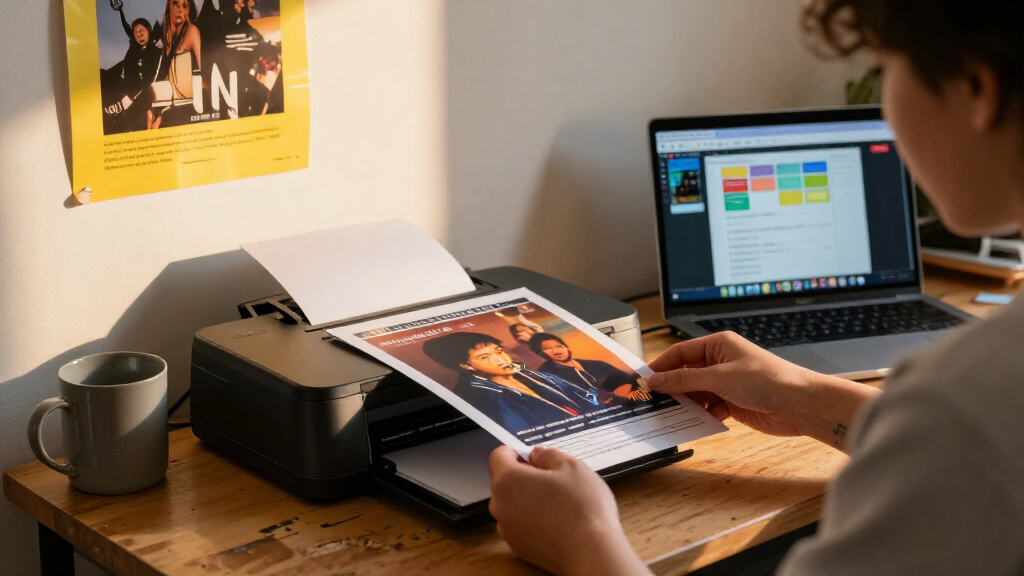
A proposed workflow would let small offices photograph paper records, then use OCR and document recognition to suggest file names, classify pages and save searchable PDFs. The idea remains a pilot proposal, not a reported product launch; its accuracy and willingness to pay have not been established.
IdeaNavigator AI has outlined a proposed pilot for a phone-based document scanner that would classify and file paper records for small offices, with five organizations each testing it on a backlog of 200 documents. The proposal targets nonprofits, clinics and law offices that need searchable records but may lack dedicated IT support; the tool is not reported as launched, and its filing accuracy has not yet been measured.
According to IdeaNavigator AI’s proposal, the workflow would start with an office employee photographing a stack of documents on a phone. The software would use optical character recognition (OCR) to read text, suggest a document category and filename, and save each page as a searchable PDF in a shared folder. The proposal gives an invoice naming pattern combining document type, date and vendor as an example.
IdeaNavigator AI describes the problem as more than converting paper to images. The proposal says generic scanner apps can leave offices with unsorted scans lacking useful names or extracted fields, while paper records such as intake forms, invoices and case or client records can be difficult to search when stored in filing cabinets. The suggested product would pair scanning with classification and filing rather than stop at image capture.
To test the idea, IdeaNavigator AI recommends a one-week pilot with five small offices. Each would scan 200 documents from a real backlog. The proposed evaluation would measure the share of documents correctly classified and whether participating offices would pay per seat. A possible business model is a monthly subscription with a page-volume limit and charges for usage above that cap; the proposal supplies no price, accuracy target or pilot outcome.
From Paper Scans to Searchable Files
For small organizations, the distinction in IdeaNavigator AI’s proposal is between having digital copies and being able to retrieve records efficiently. If a scanner can reliably identify document types and apply consistent names, staff could spend less time sorting files manually and searching through paper or poorly labeled image folders. That could help offices handling recurring paperwork, including invoices and intake forms, where dates, vendors and categories matter.
The possible benefit depends on correct classification and reliable extraction, not just on producing a PDF. Incorrect labels could make a record harder to find or place sensitive paperwork in the wrong folder. The proposed pilot could show whether the time saved is meaningful enough to justify a per-seat fee, but IdeaNavigator AI reports no results demonstrating those gains. For clinics and law offices in particular, any practical deployment would also need to account for access controls and the sensitivity of records.
Popular right now

Dyson Ball Animal 3 Upright Corded Vacuum

Shark WANDVAC Power PET Cordless Handheld Vacuum, White, WV410WH

KitchenAid Classic Series 4.5-Quart Tilt-Head Stand Mixer, Onyx Black
As an affiliate, we earn on qualifying purchases.
Why Small Offices Are the Target
IdeaNavigator AI’s proposal focuses on small nonprofits, clinics and law offices because they may manage substantial paper records without a dedicated IT team. It describes filing cabinets of intake forms, invoices and records, as well as scanner apps that capture pages but do not organize them in a useful way. These are the proposal’s stated assumptions, rather than findings from a published survey or completed customer study.
IdeaNavigator AI argues that on-device and API-based OCR, together with layout-aware models, have become affordable and accurate enough to support automatic naming, categorization and field extraction. The proposal presents that as the rationale for testing the workflow now. It does not name particular software providers, document models or technical benchmarks, or report comparative testing against current scanning tools.
Accuracy, Privacy and Pricing
IdeaNavigator AI reports no completed pilot, so it is not yet clear how often the system would assign the correct document type, read key fields accurately or produce useful filenames across different offices. The proposal says the test would measure classification accuracy, but does not specify a pass threshold, how errors would be counted or whether staff corrections would be tracked.
Other open questions include how the app would handle handwriting, mixed page sizes, poor-quality photographs and documents containing multiple types of information. The proposal does not explain where scans and extracted data would be stored, who could access them, how long they would be retained, or what safeguards would apply to clinic or legal records. Subscription pricing, page caps and overage rates are likewise unspecified. The suggested willingness-to-pay measure is a test to conduct, not evidence of demand.
A Five-Office Pilot Would Test Demand
IdeaNavigator AI proposes recruiting five small offices for a one-week trial, with each scanning 200 documents from its existing backlog. The proposed test would record how often suggested classifications are correct and ask participating offices whether they would pay per seat. Results could help determine whether the workflow is accurate and useful enough to develop further.
The proposal names no participating organizations, schedule, product release or follow-up plan. Until a pilot is completed and its methods and results are shared, the idea remains an unvalidated product concept. Source: IdeaNavigator AI proposal
Key Questions
Has an auto-filing scanner for small offices launched?
IdeaNavigator AI describes a product proposal, not a reported launch. The proposal gives no release date or available product.
How would the proposed scanner work?
Under IdeaNavigator AI’s proposal, staff would photograph documents with a phone. OCR and document recognition would suggest a category and filename, then save the page as a searchable PDF in a shared folder.
How would the idea be tested?
IdeaNavigator AI proposes a one-week pilot at five small offices, with each office scanning 200 documents. The proposed evaluation would measure classification accuracy and willingness to pay per seat.
What would the service cost?
IdeaNavigator AI gives no price. Its proposal suggests a possible monthly per-seat subscription with a page-volume cap and additional charges for pages above the cap.
Are accuracy or privacy protections established?
IdeaNavigator AI provides no performance results or specific privacy safeguards. Accuracy, data storage, access controls and handling of sensitive records remain unanswered questions.
Source: IdeaNavigator AI