📊 Full opportunity report: How The Benefit Check Bot Simplifies Access To Public Benefits on IdeaNavigator AI — validation score, market gap, and execution plan.

Get movie nights delivered free with Prime
- Fast, free delivery on millions of items
- Prime Video, Amazon Music and more included
- Member-only deals all year
TL;DR
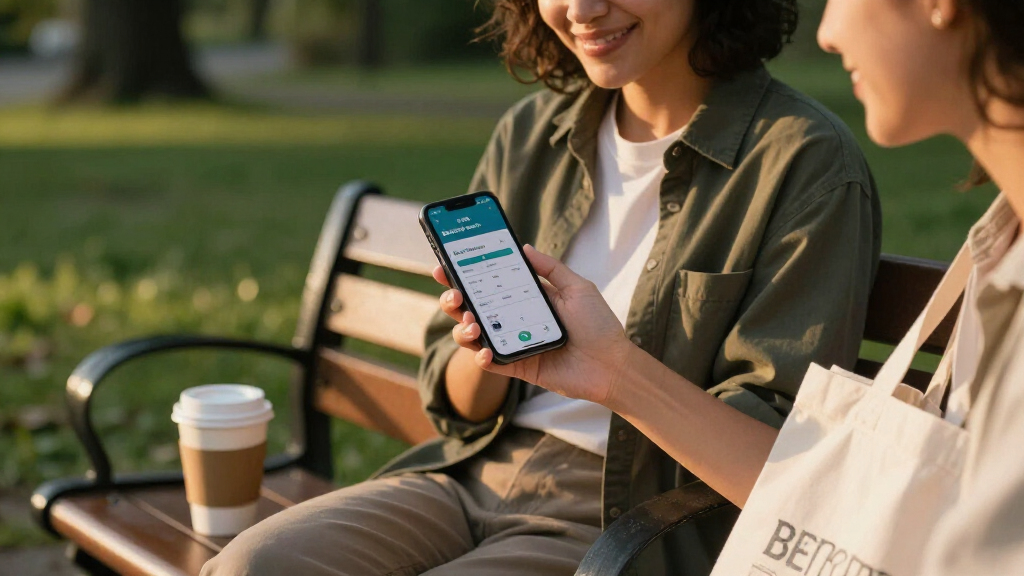
A new benefit check bot uses conversational AI to help clinics and nonprofits quickly identify clients’ eligibility for multiple public benefits. It aims to fill a gap left by the shutdown of Benefits Data Trust and the post-pandemic surge in Medicaid redeterminations. The tool promises faster, more accurate screenings at near-zero marginal cost.
A new conversational AI-based benefit check bot is being tested to streamline eligibility screening for public benefits at clinics, nonprofits, and government agencies. The tool aims to reduce the manual workload of frontline navigators and improve the accuracy and speed of identifying benefits for low-income clients, addressing a critical gap left by the shutdown of Benefits Data Trust and the increased demand from Medicaid redeterminations.
The benefit check bot is a white-label SaaS product that can be embedded on a clinic’s website, used via SMS, or integrated into existing workflows. It asks clients a series of yes/no and multiple-choice questions, then generates a list of likely-eligible programs such as SNAP, Medicaid, EITC/CTC, WIC, and LIHEAP, with benefit estimates to the dollar. It also provides next-step application links and document checklists, enabling caseworkers to deliver rapid, tailored assistance.
Developed in response to the over $100 billion in unclaimed benefits annually—due to complex eligibility rules and lengthy application processes—the tool seeks to automate and expedite screening. Its initial pilot involves 5-10 benefits navigators across two states, who will test the system on over 100 client intakes over 4-6 weeks. The goal is to measure reductions in screening time, increases in identified benefits, and accuracy compared to manual assessments.
The tool is designed to be cost-effective, with tiered subscription pricing for clinics, health systems, and nonprofits, and options for API licensing. It also offers outcome-based contracts with Medicaid managed care organizations, aiming to improve enrollment retention and reduce administrative burdens. The broader market includes social determinants of health (SDOH) technology and safety-net programs, which are increasingly relying on digital tools for outreach and enrollment.
Impact on Public Benefits Access for Low-Income Populations
The benefit check bot could significantly improve how low-income individuals access public benefits by reducing barriers related to complex eligibility rules and lengthy application procedures. By automating screening and providing real-time benefit estimates, the tool has the potential to increase enrollment rates, reduce administrative costs for providers, and ensure that families receive the benefits they qualify for but often do not claim. This is especially relevant given the recent shutdown of Benefits Data Trust, which had been a key partner in benefits outreach across multiple states, and the surge in Medicaid redeterminations following the pandemic.
Improved efficiency in benefits screening can also help health systems and community organizations better serve their clients, potentially reducing health disparities linked to social determinants of health. Policymakers and advocates see this as a step toward more equitable, data-driven social support systems, though widespread adoption depends on successful pilot results and scalability.
Popular right now

KitchenAid Artisan 5-Quart Tilt-Head Stand Mixer, KSM150PS, Almond Cream

Bose QuietComfort Headphones (2nd Gen), Wireless Noise-Cancelling Over-Ear Headphones, Eucalyptus Green

Philips 4400 Series Fully Automatic Espresso Machine with LatteGo Milk System
As an affiliate, we earn on qualifying purchases.
Background on Benefits Access and Recent Challenges
Over $100 billion in public benefits go unclaimed each year by eligible low-income families, due to fragmented eligibility rules, cumbersome application processes, and manual screening by caseworkers. The shutdown of Benefits Data Trust in 2024 removed a major capacity for outsourced benefits enrollment, leaving clinics and nonprofits with fewer resources to assist clients efficiently. Meanwhile, the post-pandemic period has seen a surge in Medicaid redeterminations, forcing millions to undergo eligibility checks, often with long wait times and high error rates.
Traditionally, benefits navigators screen clients one program at a time, which is time-consuming and prone to inaccuracies. Advances in conversational AI and digital screening tools have created opportunities to automate and streamline this process, but practical, scalable solutions are still emerging. The benefit check bot aims to fill this gap by providing a rapid, multi-program screening capability tailored for frontline organizations.
Initial testing involves a few select states and pilot organizations, with plans to expand if results demonstrate improvements in efficiency and accuracy. The broader goal is to integrate such tools into the digital infrastructure of safety-net providers and government agencies to better serve millions of eligible but unclaimed benefits recipients.
Unanswered Questions About Pilot Outcomes
It is not yet clear how well the benefit check bot will perform at scale, including its accuracy across diverse populations and in different states with varying eligibility rules. The pilot results are still being collected, and questions remain about long-term integration, user acceptance, and potential technical challenges in broader deployment.
Further, the financial sustainability of the subscription model and the extent to which agencies will adopt the tool widely are still uncertain, pending pilot success and stakeholder feedback.
Next Steps for Broader Adoption and Evaluation
The pilot organizations will evaluate the tool’s impact on screening time, benefit identification, and user satisfaction over the next few months. If results are positive, developers plan to expand testing to additional states and organizations, refine the interface, and incorporate user feedback. Successful pilots could lead to wider adoption, with plans for scaling the product nationally and integrating it into existing benefits enrollment platforms. Stakeholders will also watch for regulatory and funding developments that could support broader deployment.
Key Questions
How does the benefit check bot determine eligibility?
The bot uses a set of branching yes/no and multiple-choice questions based on state-specific eligibility rules, then estimates benefits and provides next-step application links.
Who can use the benefit check bot?
It is designed for healthcare providers, community nonprofits, and government agencies that serve low-income populations and conduct benefits screening.
Will the benefit check bot replace human navigators?
No, it is intended to augment their work by providing rapid screening results, allowing navigators to focus on complex cases and personalized assistance.
What are the costs associated with using the bot?
The system offers tiered subscription pricing for organizations, with options for API licensing and outcome-based contracts, but specific costs will depend on scale and features.
When will the tool be available for wider use?
If pilot results are favorable, wider deployment could begin within the next 6 to 12 months, with phased expansion based on feedback and technical readiness.
Source: IdeaNavigator AI