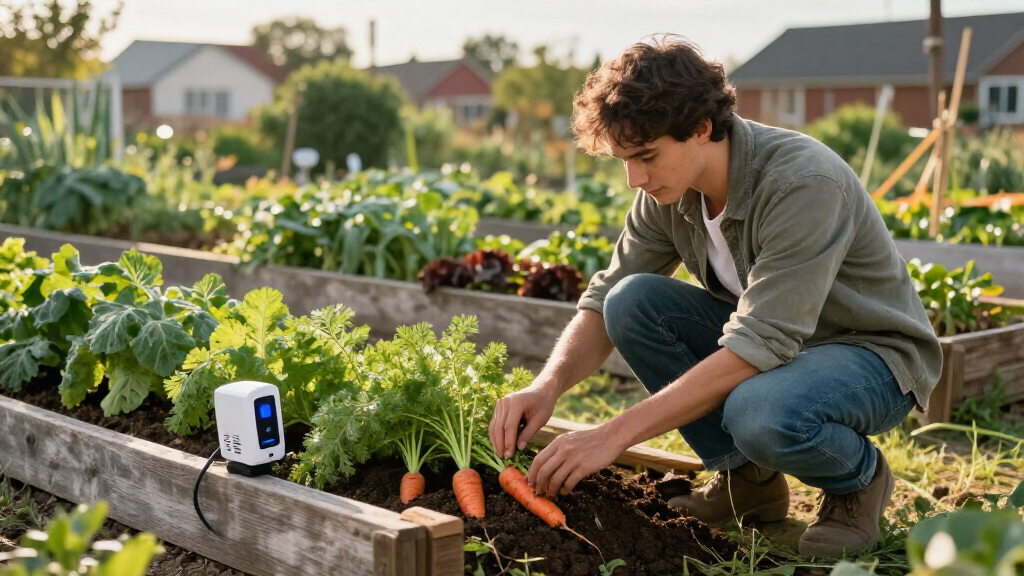

🔍 Read the full analysis: When Almost Everyone Farmed: What AI Can Learn From The Past on ThorstenMeyerAI.com

Get movie nights delivered free with Prime
- Fast, free delivery on millions of items
- Prime Video, Amazon Music and more included
- Member-only deals all year
TL;DR
A November 3, 2026, essay on ThorstenMeyerAI.com argues that agriculture offers a historical case study for thinking about AI and employment: farming’s share of work fell dramatically as tools, fertilizer and improved crops raised output. The author’s suggestion that AI could automate up to 90% of a sector within decades is a thesis, not an established forecast; the article also notes that agriculture still employs about 928 million people worldwide.
ThorstenMeyerAI.com published an analysis on November 3 arguing that agriculture’s long decline as a source of employment can inform debate about how artificial intelligence may change work. The essay traces the shift to tools, industrial fertilizer and improved crops, while making clear that its forecast of AI automating as much as 90% of a sector is the author’s thesis, not a documented outcome or consensus prediction.
The essay, titled “When Almost Everyone Farmed: What AI Can Learn From the Past,” is the second installment in Thorsten Meyer’s “Work After Work” series. It describes the historical change in agriculture as gradual rather than the result of one invention. In the United States, an estimate by economic historian Stanley Lebergott puts agriculture at 73.7% of the labor force in 1800. The source notes that early figures are estimates, that the 1810 estimate was higher, and that the 1800 labor force included enslaved people.
Meyer points to changes in farming technology and production, including John Deere’s steel plough, the industrial production of ammonia fertilizer and high-yield, short-straw wheat developed during the Green Revolution. The essay says India’s wheat harvest rose from 12.3 million tonnes in 1964-65 to 26.4 million tonnes in 1971-72, citing official statistics. It argues that higher output alongside a lower share of workers in agriculture challenges the idea that fewer farmers necessarily mean less food.
The essay also stresses that the change in employment took time and has not ended worldwide. It cites an International Labour Organization estimate of 928 million people working in agriculture in 2025, or about one in four workers globally. The share varies sharply by country: the source gives about 43% for India, 1.5% for the United States and 1% for Germany. These figures describe different national labor forces, not a single pace or path of change.
Agriculture as an AI precedent
The comparison matters because it shifts the question from whether technology can reduce the amount of labor needed in a sector to what happens to workers and production over time. Agriculture shows that large productivity gains can coexist with a much smaller share of workers in the sector. The source’s figures also show why the change should not be described as an overnight replacement: American farm-worker numbers, according to the essay, continued rising until about 1910, even as agriculture’s share of the workforce declined.
For readers weighing claims about AI and jobs, this history offers a case study, not a direct forecast. Farming involved physical work, land, machinery, biology and food markets; AI affects a different range of tasks and industries. The historical account can help frame questions about productivity and employment, but it cannot establish how quickly AI will spread, which jobs it will affect, or whether displaced workers will find comparable work.
Meyer’s estimate that automation could encompass as much as 90% of a sector in a decade or a few decades is presented as a personal thesis. The article supplies no method or evidence that would make that figure a measured prediction. Its more firmly grounded point is that agriculture’s transformation unfolded across generations and remains incomplete across countries.
Popular right now

KitchenAid Classic Series 4.5-Quart Tilt-Head Stand Mixer, Onyx Black

Ninja Luxe Café Mini Plus Espresso and Drip Coffee Machine with AutoFroth, Stainless Steel (ES351)

Vitamix 5200 Professional-Grade Blender, 64 oz. Container, Black
As an affiliate, we earn on qualifying purchases.
How farm work declined
The essay’s historical examples extend beyond the United States. It cites economic historians’ reconstruction that about 85% of Japan’s gainfully occupied population worked in the primary sector in 1872, a category that included farming, forestry and fishing. It gives a 1952 figure of 83.5% for China’s employed population in the primary sector and a 1951 figure of 69.7% for Indian workers classified as cultivators or agricultural laborers. The author cautions that these numbers come from different sources and definitions, so they are not perfectly comparable.
The article describes several stages of change. A steel plough made it easier to work sticky Midwestern soil; later machinery mechanized more farm tasks. Fritz Haber filed a patent for ammonia synthesis in 1908, and industrial production made synthetic nitrogen fertilizer available at scale. In the 1960s, short-straw wheat varieties developed in work associated with Norman Borlaug were introduced in India and Pakistan. The essay presents these developments as a chain that raised the amount of food that could be produced per worker, rather than a single moment when farming was automated.
It also notes that the employment share and the number of workers can move differently. In Germany, agriculture’s share fell from 43% to 25% between 1882 and 1939, while the number of farm workers stayed between eight million and 10 million, according to the figures cited. This distinction is central to the essay’s argument: a sector can account for a smaller portion of the workforce without its worker count immediately falling.
““The share fell long before the headcount.””
— Thorsten Meyer, ThorstenMeyerAI.com
Limits of the farming analogy
The essay does not provide a model for its estimate that AI could automate up to 90% of a sector, nor does it specify which sector, jobs or tasks that figure covers. The timeframe—“a decade or a few decades”—is broad. It is therefore best read as the author’s argument about possible scale, not a prediction supported by a stated calculation.
It is also unclear how readily the agricultural history transfers to occupations affected by AI. The source describes past changes in farming output and employment but does not compare those changes with current AI capabilities, adoption rates, investment costs or labor-market data. The historical figures cited come from different eras and definitions, and some early national estimates are reconstructions rather than direct census counts.
The article’s global figure of 928 million agricultural workers is attributed to an ILO estimate for 2025. It indicates that farming remains a major source of work, but the supplied material does not give a detailed breakdown of those jobs or a forecast for how their number may change.
Further installments in the series
The essay identifies itself as Episode 2 of the “Work After Work” series and says Episode 1 introduced a three-part view of the economy: field, factory and office. It points readers to Episode 3 for the history of mechanical reapers, threshers and tractors. No publication date for that installment is given in the source material.
For the AI argument, the next step would be evidence that directly connects adoption of AI tools with changes in tasks, output and employment across particular industries. Until such evidence is presented, the farm comparison remains a historical framework for discussion, while the proposed 90% figure remains Meyer’s stated thesis.
Key Questions
What is the main claim of the essay?
The essay argues that agriculture’s long shift toward higher output with a smaller share of workers can offer a useful historical comparison for thinking about AI and jobs. It does not show that AI will follow the same path.
How many people still work in agriculture worldwide?
The essay cites an ILO estimate of 928 million agricultural workers in 2025, about one in four workers worldwide.
Does the essay predict that AI will automate 90% of a sector?
Meyer says automation could reach up to 90% of a sector within a decade or a few decades, but labels this as his thesis, not a fact. The source provides no forecasting method or supporting calculation for the figure.
What changes helped reduce the share of workers in farming?
The essay points to improved tools and machinery, synthetic nitrogen fertilizer, and higher-yield crop varieties. It describes these as successive developments that increased agricultural productivity over time.
Source: ThorstenMeyerAI.com