
TL;DR

Get movie nights delivered free with Prime
- Fast, free delivery on millions of items
- Prime Video, Amazon Music and more included
- Member-only deals all year
Siemens announced a strategic shift toward industrial AI, emphasizing physical-world data and domain knowledge. Partnering with NVIDIA, it aims to embed AI across manufacturing processes, starting with a flagship factory in Germany. The move highlights Siemens’ confidence in AI’s potential to reshape factory floors, though reliance on NVIDIA infrastructure remains a concern.
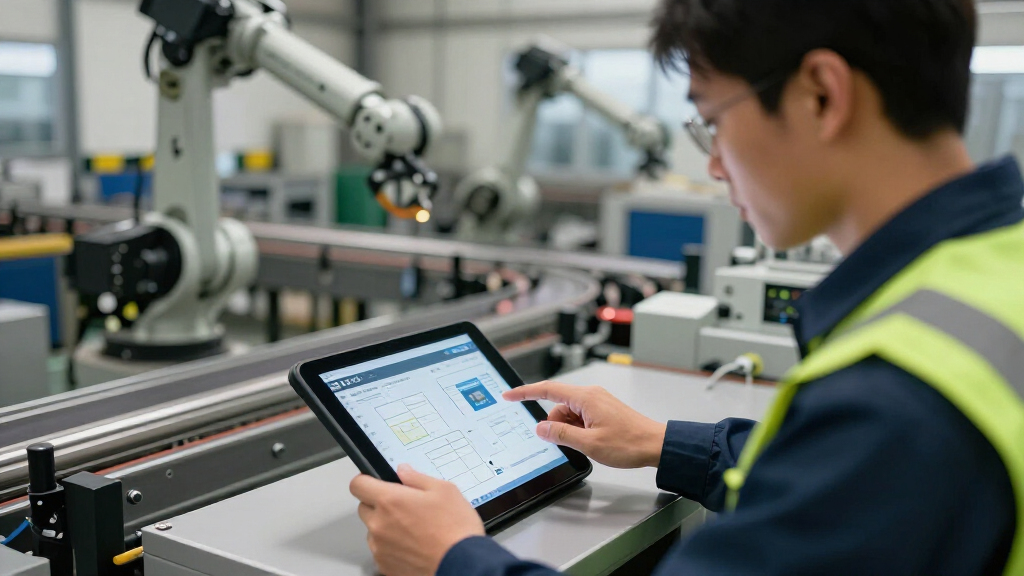
Siemens has announced a major strategic shift towards industrial AI, emphasizing the application of artificial intelligence in physical manufacturing environments rather than chatbots or language models. The company plans to develop a platform called the ‘Industrial Foundation Model’ and expand its partnership with NVIDIA to embed AI across the entire industrial lifecycle, starting with a fully AI-driven factory in Erlangen, Germany, in 2026. This move aims to leverage Siemens’ extensive industrial data and domain expertise to reshape factory operations.
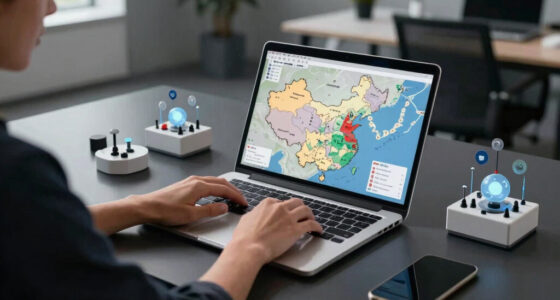
At CES 2026, Siemens CEO Roland Busch highlighted that ‘Industrial AI is no longer a feature; it’s a force that will reshape the next century,’ emphasizing the company’s focus on physical-world applications. Siemens’ Industrial Foundation Model (IFM), announced at Hannover Messe 2025, is designed to process and contextualize 3D models, 2D drawings, sensor telemetry, and automation logic to optimize engineering and manufacturing processes. The partnership with NVIDIA aims to create an ‘Industrial AI Operating System’ that integrates GPU-accelerated simulation, generative digital twins, and autonomous factory management tools.
The first fully AI-driven manufacturing site is planned for 2026 at Siemens’ Electronics Factory in Erlangen, serving as a blueprint for global deployment. Siemens also plans to introduce Digital Twin Composer and collaborate with early users like PepsiCo to simulate facility upgrades. The strategy leverages Siemens’ proprietary industrial data and domain expertise, which it argues are key advantages over general-purpose AI models.
However, much of the AI infrastructure depends on NVIDIA’s hardware and software, raising questions about independence and sovereignty, especially for European customers. Siemens emphasizes that its data and domain knowledge are unique assets, but critics note the heavy reliance on NVIDIA’s ecosystem.
Why Siemens’ Industrial AI Strategy Matters for Manufacturing
Siemens’ focus on physical-world AI represents a significant shift in industrial automation, moving beyond traditional automation hardware to intelligent systems that actively optimize manufacturing in real time. This approach could lead to increased efficiency, reduced downtime, and more adaptive factories, potentially transforming global manufacturing competitiveness. The partnership with NVIDIA accelerates this vision but also raises concerns about dependency on US-based technology providers. For industrial stakeholders, Siemens’ move signals a new era where domain expertise combined with AI could redefine factory operations, but adoption will be slow due to long equipment replacement cycles.
As an affiliate, we earn on qualifying purchases.
Background of Siemens’ Industrial AI Initiatives
Siemens has a 175-year history in industrial automation and digitalization, with a broad portfolio of automation hardware, software, and engineering services. Its previous efforts focused on digitizing factory processes and developing digital twins, but the company now aims to embed AI more deeply into physical manufacturing systems. The announcement at Hannover Messe 2025 of the Industrial Foundation Model marked the start of this new focus, with the goal of creating AI that understands and manipulates physical data rather than just language or text.
Partnering with NVIDIA, a leader in GPU computing and AI frameworks, Siemens seeks to leverage advanced simulation, physics-based models, and generative AI to create smarter factories. The concept of a ‘lighthouse’ factory in Erlangen exemplifies this strategy, aiming to demonstrate how AI can dynamically adapt manufacturing processes in real time, a significant evolution from traditional automation systems.
“Industrial AI is no longer a feature; it’s a force that will reshape the next century.”
— Roland Busch, Siemens CEO
digital twin software for manufacturing
As an affiliate, we earn on qualifying purchases.
As an affiliate, we earn on qualifying purchases.
Uncertainties Surrounding Siemens’ Industrial AI Push
Much of Siemens’ announced strategy relies on partnerships with NVIDIA, with limited details on hardware deployment timelines or validated performance metrics. The fully AI-driven factory in Erlangen is a 2026 target, but specific operational results or ROI data remain unavailable. Additionally, the dependence on NVIDIA’s ecosystem raises questions about independence and control, especially for European clients concerned about data sovereignty. The broader industrial AI market is also becoming crowded, with competitors like Palantir and Qualcomm entering adjacent spaces, which could impact Siemens’ market share and influence.
sensor telemetry data analysis tools
As an affiliate, we earn on qualifying purchases.
As an affiliate, we earn on qualifying purchases.
Next Steps for Siemens’ Industrial AI Implementation
Siemens plans to launch its fully AI-driven factory in Erlangen in 2026, serving as a showcase for its industrial AI platform. The company will also roll out Digital Twin Composer and expand its industrial copilots across various manufacturing sectors. Monitoring performance metrics, customer adoption, and integration success will be critical over the coming year. Further, Siemens will need to address concerns about NVIDIA dependency and demonstrate tangible ROI to solidify its leadership position in industrial AI.
AI-powered factory automation systems
As an affiliate, we earn on qualifying purchases.
As an affiliate, we earn on qualifying purchases.
Key Questions
How is Siemens’ industrial AI different from general-purpose AI models?
Siemens’ industrial AI focuses on physical data, such as 3D models, sensor telemetry, and automation logic, leveraging domain expertise to optimize manufacturing processes, unlike general-purpose models that primarily handle language or text.
What role does NVIDIA play in Siemens’ AI strategy?
NVIDIA provides the hardware, simulation libraries, and AI frameworks that underpin Siemens’ industrial AI platform, including GPU acceleration and physics-based models, making Siemens reliant on NVIDIA’s ecosystem.
When will the fully AI-driven factory in Erlangen be operational?
Siemens targets 2026 for the launch of its fully AI-driven, adaptive manufacturing site in Erlangen, serving as a prototype for future deployments.
What are potential risks of Siemens’ approach?
The reliance on NVIDIA’s infrastructure raises concerns about dependency, data sovereignty, and control, especially for European clients wary of US-based technology dependence.
Will Siemens’ industrial AI be adopted quickly?
Given the long replacement cycles in industrial equipment and the cautious nature of manufacturing upgrades, adoption is expected to be gradual, over several years.
Source: ThorstenMeyerAI.com
Fall Picks
fall essentials
As an affiliate, we earn on qualifying purchases.