
📊 Full opportunity report: The Memory Squeeze: Why Your RAM Bill Doubled on ThorstenMeyerAI.com — validation score, market gap, and execution plan.
TL;DR
In 2026, RAM prices have doubled or tripled, with some kits costing up to six times more than last year. This surge is driven by a strategic shift in chip manufacturing toward AI applications, reducing supply for consumer memory. The shortage is unlikely to resolve soon due to deliberate capacity reallocation and high demand from large buyers.
DRAM prices have surged dramatically in 2026, with 32GB DDR5 kits now costing around $375—a more than threefold increase from last year’s prices. This sharp rise is driven by a fundamental shift in chip manufacturing priorities, as leading producers redirect capacity toward AI-related memory products, making consumer RAM increasingly expensive and scarce.
Over the past year, the cost of consumer DRAM has doubled to tripled, with 32GB DDR5 kits rising from about $80–$120 in 2025 to nearly $375 in June 2026, according to Tom’s Hardware. 64GB kits, previously priced around $150–$200, now often list above $600. This price inflation has made RAM the most expensive component in many PC builds, with HP reporting memory costs accounting for up to 35% of total build materials, up from 15–18% earlier this year.
The core cause is a shift in manufacturing focus. Three companies—Samsung, SK Hynix, and Micron—produce nearly all of the world’s DRAM. They are now reallocating wafer capacity from consumer memory to produce High Bandwidth Memory (HBM), a specialized, stacked DRAM used in AI accelerators like Nvidia’s GPUs. HBM modules sell for $60–$100 each, compared to $5–$10 for standard DDR5, making the higher-margin HBM more profitable for manufacturers.
This reallocation is physically inefficient: HBM consumes roughly three to four times the wafer area of DDR5 per bit, effectively reducing the total consumer DRAM output. Currently, HBM accounts for about 23% of DRAM wafer production, up from 19% last year, with AI applications expected to absorb about 20% of all DRAM capacity in 2026. This ongoing prioritization of high-margin AI memory is the main driver of the persistent shortage.
Why your RAM bill doubled
“Doubled” is the polite version — consumer DRAM is running 3–6× its 2024 lows. The boom-bust cycle that always brought cheap RAM back isn’t coming this time, because the factories that make your RAM now make something far more profitable instead.
HBM
This is the quiet tax on the whole AI era. Relief isn’t forecast before 2028, and even then prices may settle 30–50% above pre-crisis levels. Buy what you genuinely need now; don’t panic-buy capacity you won’t use. You can’t out-wait the fab math — but, as this series will show, you can shrink what you need. Next: HBM Ate the Fab.
Impact of AI-Driven Memory Reallocation on Consumers
The shift toward AI-focused memory production means consumer RAM shortages and price hikes are unlikely to ease soon. This affects individual consumers, PC builders, and enterprise customers, who face higher costs and limited availability. It also signals a broader industry trend: the prioritization of high-margin AI hardware over traditional consumer electronics, potentially reshaping the supply landscape for years to come.

Crucial 32GB DDR5 RAM Kit (2x16GB), 5600MHz (or 5200MHz or 4800MHz) Laptop Memory 262-Pin SODIMM, Compatible with Intel Core and AMD Ryzen 7000, Black – CT2K16G56C46S5
Boosts System Performance: 32GB DDR5 RAM laptop memory kit (2x16GB) that operates at 5600MHz, 5200MHz, or 4800MHz to…
As an affiliate, we earn on qualifying purchases.
As an affiliate, we earn on qualifying purchases.
Background on the 2026 Memory Market Shift
Historically, memory shortages in the industry have been temporary, with prices falling as new capacity was added. However, in 2026, the pattern has changed. The three dominant DRAM makers—Samsung, SK Hynix, and Micron—are deliberately reallocating wafer capacity toward producing HBM for AI, which offers significantly higher profit margins. This strategic choice is driven by the explosive growth in AI applications, which demand specialized memory solutions that consume more wafer area and are less scalable than consumer DDR5.
Prior to 2026, DRAM prices fluctuated with supply and demand, but the current scenario is different: capacity expansion plans have been delayed, with new fabs not expected to come online until 2027–2028. Meanwhile, large buyers, including hyperscalers and enterprise clients, have placed large, long-term contracts that lock in supply, reducing the market’s flexibility and exacerbating shortages for consumer markets.
“Our focus has shifted toward enterprise AI solutions, which are more profitable and align with long-term growth strategies.”
— A senior executive at Micron
high capacity gaming RAM
As an affiliate, we earn on qualifying purchases.
As an affiliate, we earn on qualifying purchases.
Unclear Aspects of the 2026 DRAM Supply Situation
It remains uncertain whether the current high prices are solely due to supply reallocation or if there are underlying collusion concerns, given the industry’s history of price-fixing. Additionally, the pace at which new capacity will come online and whether manufacturers will adjust their strategies in response to market pressures are still developing factors. The long-term impact on the consumer memory market and pricing dynamics is also not fully predictable.
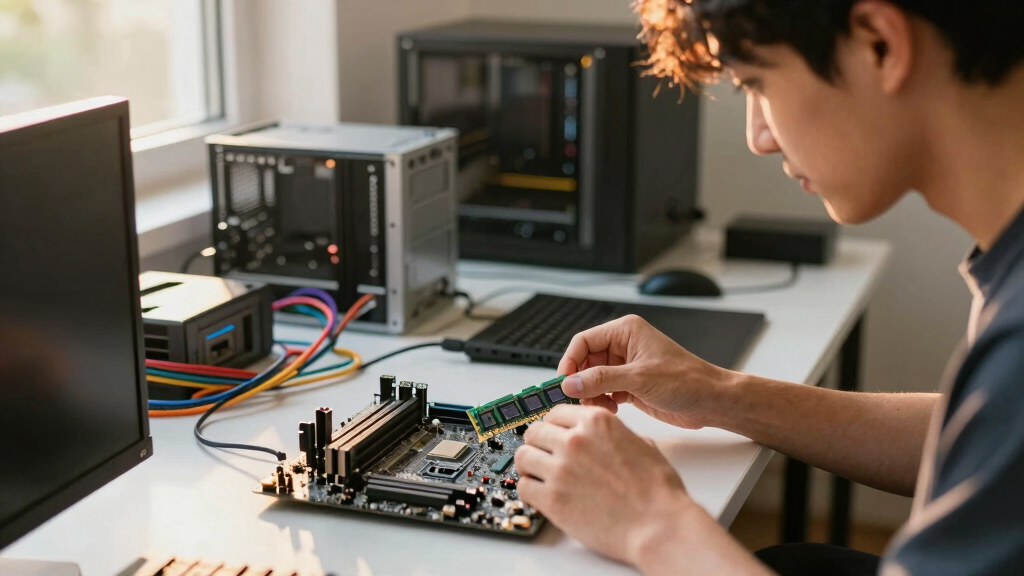
DDR5 memory modules
As an affiliate, we earn on qualifying purchases.
As an affiliate, we earn on qualifying purchases.
Future Developments in Memory Supply and Pricing
Manufacturers are expected to continue prioritizing AI memory production through 2026 and into 2027, with new fabs gradually increasing supply. However, prices are unlikely to normalize until additional capacity is operational and the demand from AI applications stabilizes. Consumers and PC builders should prepare for continued high prices and limited availability, while industry analysts will monitor capacity expansion timelines and potential shifts in manufacturer strategies.
AI optimized HBM memory
As an affiliate, we earn on qualifying purchases.
As an affiliate, we earn on qualifying purchases.
Key Questions
Will RAM prices ever return to normal in 2026?
It is unlikely in the short term, as the industry is prioritizing high-margin AI memory, and capacity expansion is delayed. Prices may stabilize if new fabs come online and demand from AI applications levels off.
Why are AI memory modules more profitable for manufacturers?
HBM modules sell for three to five times the price of standard DDR5, despite being physically less efficient to produce, making them a more lucrative product for chipmakers.
How does this shift affect regular consumers and PC builders?
Consumers face higher prices and limited availability of RAM, which can delay upgrades and increase costs for new builds. Some brands are raising prices or delaying product launches as a result.
Is collusion involved in the current price surge?
While manufacturers have a history of price-fixing, current prices are attributed to genuine supply reallocation toward AI memory. No recent antitrust actions have been publicly filed related to this specific situation.
Source: ThorstenMeyerAI.com