
📊 Full opportunity report: How Costco's Business Operations Differ From Amazon's Approach on IdeaNavigator AI — validation score, market gap, and execution plan.

Get movie nights delivered free with Prime
- Fast, free delivery on millions of items
- Prime Video, Amazon Music and more included
- Member-only deals all year
TL;DR
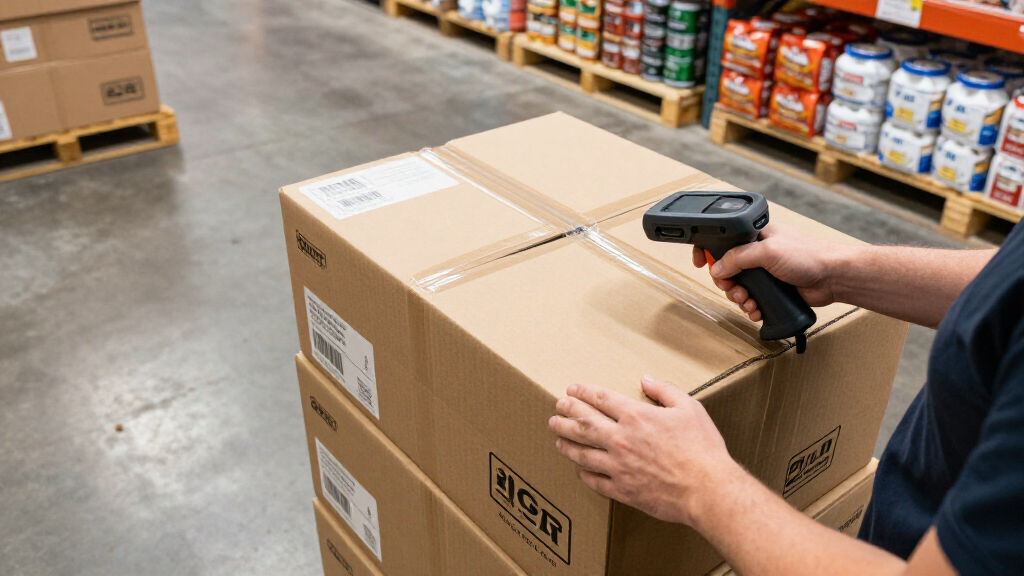
Costco and Amazon employ fundamentally different business models. Costco focuses on membership-based bulk sales with limited online presence, while Amazon emphasizes vast product selection and rapid delivery. This distinction impacts their growth strategies and customer engagement.
Costco and Amazon exemplify two contrasting approaches to retail: Costco relies on membership-based bulk sales with limited online offerings, whereas Amazon emphasizes vast product variety and fast delivery. This divergence shapes their growth strategies and customer engagement, with implications for competitors and small business operators.
Costco operates primarily through a warehouse club model that requires customers to purchase memberships, granting access to bulk items at discounted prices. Its physical stores are central to its strategy, with a focus on high-volume sales and limited online presence. In contrast, Amazon’s business is built on a vast online marketplace that offers an extensive product catalog, rapid delivery, and personalized shopping experiences. Amazon invests heavily in logistics infrastructure, including fulfillment centers and delivery networks, to fulfill customer orders swiftly.
While Costco maintains a relatively small online sales share—estimated at around 4-5% of total revenue—Amazon’s entire business is rooted in e-commerce, accounting for approximately 60% of its revenue. Costco’s approach emphasizes customer loyalty through memberships and a curated product selection, whereas Amazon leverages data-driven personalization and a broad product ecosystem to attract and retain customers.
Industry experts note that Costco’s model fosters high customer retention due to its value proposition and in-store experience, while Amazon’s strategy aims for market dominance through scale and convenience. The two companies’ operational focus reflects their differing priorities: Costco prioritizes low prices through high-volume sales with limited online expansion, while Amazon prioritizes rapid delivery and extensive product offerings online.
Implications for Market Competition and Small Business
The contrasting operational strategies of Costco and Amazon highlight different paths to retail success, which can influence market competition, consumer choices, and opportunities for small businesses. Costco’s model demonstrates resilience through customer loyalty and physical presence, while Amazon’s approach exemplifies the power of logistics and data-driven e-commerce. Understanding these differences helps small business operators identify which approach may better suit their growth and customer engagement strategies.
As an affiliate, we earn on qualifying purchases.
Retail Industry Strategies and Evolution
Over the past decade, Amazon has transformed the retail landscape with its focus on e-commerce, logistics innovation, and global reach. Its model relies on vast online inventories, fast delivery, and personalized shopping experiences. Meanwhile, Costco has maintained its traditional warehouse club approach, emphasizing high-volume, low-margin sales through physical stores and a membership model. The rise of online shopping has challenged Costco’s brick-and-mortar focus, but its loyalty-driven approach and bulk sales remain strong in certain segments. Recent industry shifts suggest that both companies are adapting in different ways: Amazon expanding into grocery and physical stores, and Costco increasing its online offerings, though at a slower pace.
membership warehouse shopping cart
As an affiliate, we earn on qualifying purchases.
As an affiliate, we earn on qualifying purchases.
Unclear How Small Businesses Can Leverage These Models
It remains unclear how small businesses can adopt or adapt these contrasting strategies effectively, especially given the scale and resources of Costco and Amazon. The potential for small firms to emulate Costco’s loyalty-driven, physical store approach or Amazon’s logistics-heavy online model is still being explored, and success may depend on industry, target market, and operational capacity.
As an affiliate, we earn on qualifying purchases.
Future Trends in Retail Operations and Strategy
Both Costco and Amazon are likely to continue evolving their operational models—Costco possibly expanding its online presence further, and Amazon investing in physical stores and logistics innovations. Small businesses should monitor these developments to identify opportunities for strategic adaptation, such as niche online marketplaces or localized wholesale models. Industry analysts expect increased integration of online and offline channels, with operational efficiency remaining a key focus.
As an affiliate, we earn on qualifying purchases.
Key Questions
How does Costco’s membership model influence its operations?
Costco’s membership model creates a steady revenue stream and fosters customer loyalty, enabling it to focus on high-volume sales and limited marketing costs. This approach shapes its operational priorities around bulk inventory management and in-store experience.
Why is Amazon’s logistics infrastructure so important?
Amazon’s logistics network allows for rapid delivery and vast product availability, giving it a competitive edge in customer convenience and enabling it to scale operations globally.
Can small businesses replicate Costco’s or Amazon’s strategies?
While direct replication may be challenging due to scale, small businesses can adapt core principles—such as building customer loyalty or optimizing logistics—to fit their size and market niche.
What are the risks for Costco and Amazon in their current strategies?
Costco risks losing online market share if it doesn’t expand digital offerings, while Amazon faces regulatory scrutiny and logistical challenges as it scales further into physical retail and logistics.
How might these strategies influence future retail trends?
Expect continued blending of online and offline channels, with operational efficiency and customer experience remaining central to retail innovation.
Source: IdeaNavigator AI
Halloween Picks
halloween
As an affiliate, we earn on qualifying purchases.