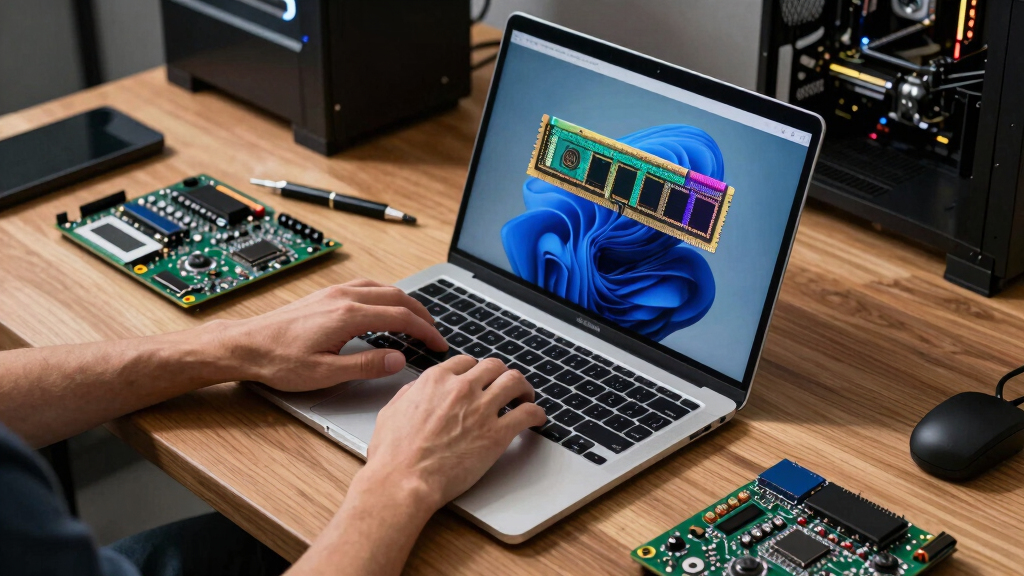

📊 Full opportunity report: The Memory Squeeze: Why Your RAM Bill Doubled on ThorstenMeyerAI.com — validation score, market gap, and execution plan.

Get movie nights delivered free with Prime
- Fast, free delivery on millions of items
- Prime Video, Amazon Music and more included
- Member-only deals all year
TL;DR
RAM prices have doubled or more in early 2026 due to a strategic shift by chipmakers toward AI-focused products. This has caused shortages, higher consumer costs, and supply chain impacts, with no quick fix in sight.
DRAM prices have roughly doubled or tripled in 2026, with the cheapest 32GB DDR5 kits now costing over $375, up from about $120 a year earlier, according to Tom’s Hardware. This surge is driven by a fundamental shift in chip manufacturing priorities, making memory more expensive and scarce for consumers and OEMs alike.
Major manufacturers — Samsung, SK Hynix, and Micron — are redirecting their wafer capacity from standard consumer DRAM to High Bandwidth Memory (HBM), which is used in AI accelerators like GPUs. HBM sells for three to five times the price of DDR5, incentivizing manufacturers to prioritize its production despite its inefficiency in wafer use, with each wafer producing fewer HBM chips than DDR5.
This shift has resulted in HBM consuming about 23% of the total DRAM wafer output, up from 19% last year, and AI applications are expected to absorb about 20% of all DRAM capacity in 2026. As a consequence, supply growth remains below historical levels, with only about 16% increase in DRAM bits this year, far below the 20–30% typical during previous shortages.
Manufacturers are deliberately managing scarcity by maintaining high margins, with long-term contracts and limited capacity expansion. Learn more about the chip supply chain issues. Micron, for example, has retired its consumer-focused Crucial brand and shifted focus to enterprise AI customers. Major PC makers like Apple, Lenovo, and Dell have announced or implemented significant price hikes, and counterfeit modules are emerging due to shortages.
Why your RAM bill doubled
“Doubled” is the polite version — consumer DRAM is running 3–6× its 2024 lows. The boom-bust cycle that always brought cheap RAM back isn’t coming this time, because the factories that make your RAM now make something far more profitable instead.
HBM
This is the quiet tax on the whole AI era. Relief isn’t forecast before 2028, and even then prices may settle 30–50% above pre-crisis levels. Buy what you genuinely need now; don’t panic-buy capacity you won’t use. You can’t out-wait the fab math — but, as this series will show, you can shrink what you need. Next: HBM Ate the Fab.
Why Rising RAM Prices Impact Consumers and Industry
This surge in memory costs affects every segment of the PC and server markets, leading to higher prices for devices and components. Consumers face increased costs for upgrades and new builds, while OEMs and enterprises must navigate supply constraints and contractual obligations. The shift toward AI hardware signifies a permanent reallocation of manufacturing capacity, with no quick return to previous supply levels, fundamentally altering the memory market landscape.
As an affiliate, we earn on qualifying purchases.
The 2026 Memory Crunch: How We Got Here
Historically, memory shortages eased when new fabs increased supply, causing prices to fall. However, in 2026, the dominant chipmakers—Samsung, SK Hynix, and Micron—are intentionally prioritizing high-margin AI hardware over consumer DRAM, leading to a structural shortage. This is compounded by the lengthy timelines for new fab construction, which are now measured in years, not months, and by the market’s management of supply to preserve margins.
Past shortages were often resolved by flooding the market with new capacity, but this time, the industry’s focus on AI-related products and the concentration of market power mean supply remains constrained, with little incentive to quickly increase output for consumer memory.
“Our focus is on enterprise AI customers, and we’re adjusting our production accordingly.”
— Micron spokesperson
As an affiliate, we earn on qualifying purchases.
Unresolved Questions About Market Dynamics
It remains unclear whether the current high prices are solely due to supply reallocation or if collusion or market manipulation still play a role. Additionally, the timeline for meaningful capacity expansion is uncertain, with new fabs not expected to impact supply until 2027–2028. The long-term impact on consumer prices and the potential for alternative memory solutions are also still developing topics.
As an affiliate, we earn on qualifying purchases.
Future Developments in Memory Supply and Pricing
Manufacturers are expected to continue managing capacity carefully, with some expansion planned for late 2027 or early 2028. Consumers and OEMs should anticipate sustained high prices and potential shortages until new capacity begins to come online. Monitoring industry announcements and capacity investments will be key to understanding when supply might normalize.
As an affiliate, we earn on qualifying purchases.
Key Questions
Will RAM prices ever return to 2024 levels?
It is uncertain. Prices may stabilize or decrease if new capacity is added or if demand slows, but current trends suggest prices will remain high through 2027 at least.
Why are HBM modules so much more expensive than DDR5?
HBM modules are more costly due to their complex stacking process, higher wafer area consumption, and lower yields, which make them a less efficient but more profitable product for manufacturers.
How is this shortage affecting PC and server prices?
PC and server prices are rising as OEMs pass on higher memory costs, with some delaying new product launches or increasing upgrade costs.
Are there alternatives to DDR5 that could help reduce costs?
Currently, DDR4 remains available but is nearing end-of-life, and no immediate alternative memory type offers a significant price reduction. The focus remains on resolving supply constraints for DDR5 and HBM.
Source: ThorstenMeyerAI.com
Fall Picks
fall essentials
As an affiliate, we earn on qualifying purchases.