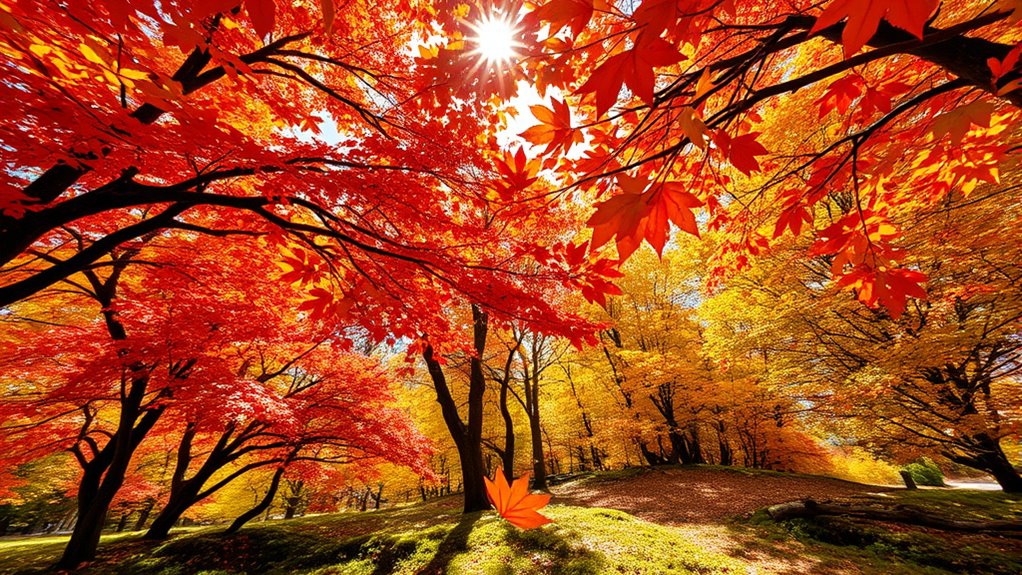

As autumn arrives, you see leaves turn vibrant reds, oranges, and yellows because of changes in tree biology. When days get shorter and temperatures drop, trees produce less chlorophyll, which makes leaves green. This reveals other pigments like carotenoids and anthocyanins, giving the leaves their stunning colors. Different tree species create a variety of hues, making fall scenery breathtaking. If you want to understand the science behind these colors, keep exploring how trees adapt to seasonal changes.
Key Takeaways
- During autumn, chlorophyll breaks down, revealing other pigments like carotenoids and anthocyanins.
- Reduced daylight and cooler temperatures signal trees to halt chlorophyll production.
- Carotenoids produce yellow and orange hues, while anthocyanins create reds and purples.
- Different tree species have varying pigment levels, leading to diverse fall colors.
- The color change helps trees conserve energy and prepare for winter dormancy.
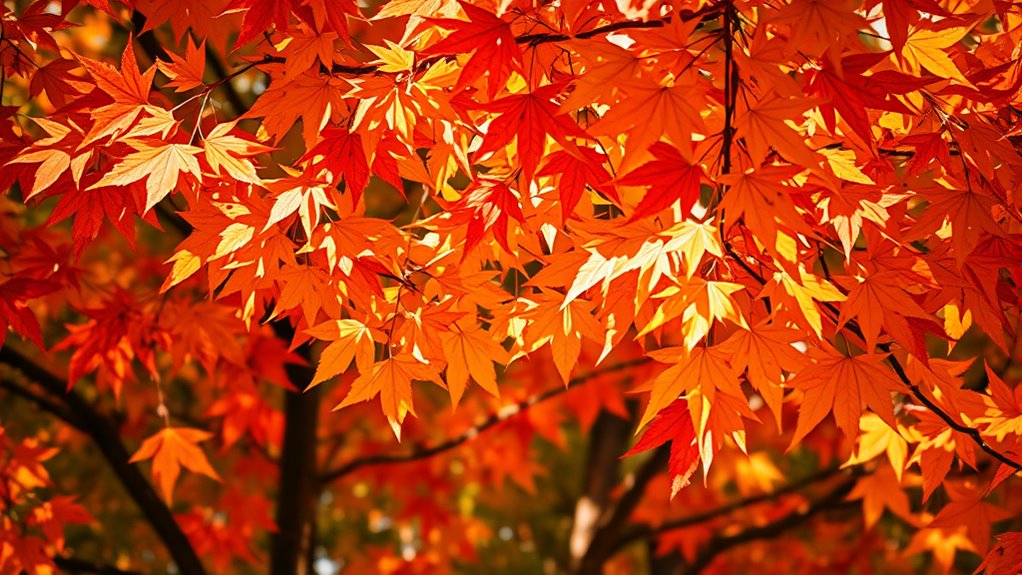
As autumn arrives, the leaves on trees transform from vibrant green to brilliant shades of red, orange, and yellow, creating a stunning landscape that captures everyone’s attention. This change isn’t just about aesthetics; it’s a complex process rooted in the biology of trees and their response to seasonal shifts. One key factor is the photosynthesis process, which is how trees produce food using sunlight, water, and carbon dioxide. During the growing season, chlorophyll, the pigment responsible for the green color, dominates the leaves. It captures sunlight efficiently, allowing the tree to make the sugars it needs to grow and thrive.
As autumn arrives, trees change color as chlorophyll breaks down, revealing vibrant reds, oranges, and yellows.
As days grow shorter and temperatures drop, the trees prepare for winter by gradually reducing chlorophyll production. When chlorophyll breaks down and fades away, the other pigments present in the leaves become more visible. Carotenoids, which produce yellow and orange hues, are always present in the leaf but are masked by the dominant green. As chlorophyll diminishes, these warm colors shine through, creating the familiar autumnal palette. Additionally, if the tree contains anthocyanins—red and purple pigments—these are produced in response to the changing conditions, adding vibrant reds and purples to the mix.
Tree species diversity plays a significant role in the variety of autumn colors you observe. Different species have different types and amounts of pigments, which is why some trees turn bright red, others yellow, and some display a mix of hues. For example, maples are known for their striking red leaves, thanks to high levels of anthocyanins, while birches often turn bright yellow due to carotenoids. This diversity adds to the visual richness of the landscape, making autumn a time when the variety of tree species truly shines.
The decline in photosynthesis during fall is a survival strategy. As photosynthesis slows, the tree conserves energy and prepares for winter dormancy. The changing colors are a visible sign of this transition, a kind of natural goodbye to the lush growth of summer. So, when you see those fiery reds and golden yellows, remember it’s a beautiful, intricate process rooted in the tree’s biology and its adaptation to seasonal cycles. This interplay of pigments, driven by the tree’s species and the environment, creates the breathtaking spectacle that makes autumn so memorable.
Furthermore, leaf pigmentation is influenced by environmental factors such as temperature and light, which can intensify or diminish the vibrancy of fall colors.
As an affiliate, we earn on qualifying purchases.
Frequently Asked Questions
How Do Different Tree Species Influence Leaf Colors?
Different tree species influence leaf colors through pigment variation, affecting the shades you see in autumn. As chlorophyll breaks down during fall, other pigments like carotenoids and anthocyanins become visible. You’ll notice oaks display rich browns, maples turn vibrant reds, and aspens showcase yellows. These variations depend on each species’ unique pigment composition, which determines the specific colors that emerge as chlorophyll fades and the breakage occurs.
Can Weather Patterns Affect the Timing of Leaf Color Change?
Yes, weather patterns can influence the timing of leaf color change. Climate variability and temperature fluctuations play a significant role, as warmer falls may delay the process, while cooler temperatures can speed it up. Sudden cold snaps or extended warm spells can also cause leaves to change color earlier or later than usual. You’ll notice these changes happen unpredictably, depending on the specific weather conditions each year.
Do Leaf Colors Have Any Impact on Local Ecosystems?
You notice the vibrant reds and golds, but they also impact local ecosystems. As leaves fall, they create colorful leaf litter that covers the ground, providing essential habitat for insects and fungi. This process fuels nutrient cycling, enriching the soil for plants and trees. Your presence in this scene helps sustain the delicate balance, where the changing leaf colors signal the progression that supports ecosystem health.
How Do Insects React to Changing Leaf Colors?
You’ll notice insects react to changing leaf colors by altering their insect behavior, often becoming more active or seeking new hiding spots. As leaves turn, predator-prey interactions shift—predators may find it easier to spot prey against the vibrant backdrop, while prey adapt by hiding better or changing their activity patterns. These color changes influence insect movement and survival, impacting the overall balance of local ecosystems during autumn.
Are There Health Benefits Associated With Viewing Autumn Foliage?
Yes, viewing autumn foliage offers health benefits. When you take time to enjoy the vibrant colors, you experience visual relaxation that reduces stress. This scenic beauty also boosts your mental well-being by encouraging mindfulness and positive emotions. Spending time outdoors amid fall’s stunning displays can improve your mood, lower anxiety, and promote overall mental health. So, make a point to pause and appreciate the rich hues of autumn for your well-being.
As an affiliate, we earn on qualifying purchases.
Conclusion
As autumn paints the world in fiery hues, remember that just like the changing seasons reflect life’s cycles, your own moments of transformation are beautiful. Nature’s grand finale reminds you that letting go makes space for new beginnings, much like the leaves surrender their green to reveal vibrant shades. Embrace these changes with open arms, knowing you’re part of a timeless dance—where every ending sparks a fresh and colorful start.
tree identification app for fall colors
As an affiliate, we earn on qualifying purchases.
As an affiliate, we earn on qualifying purchases.
As an affiliate, we earn on qualifying purchases.