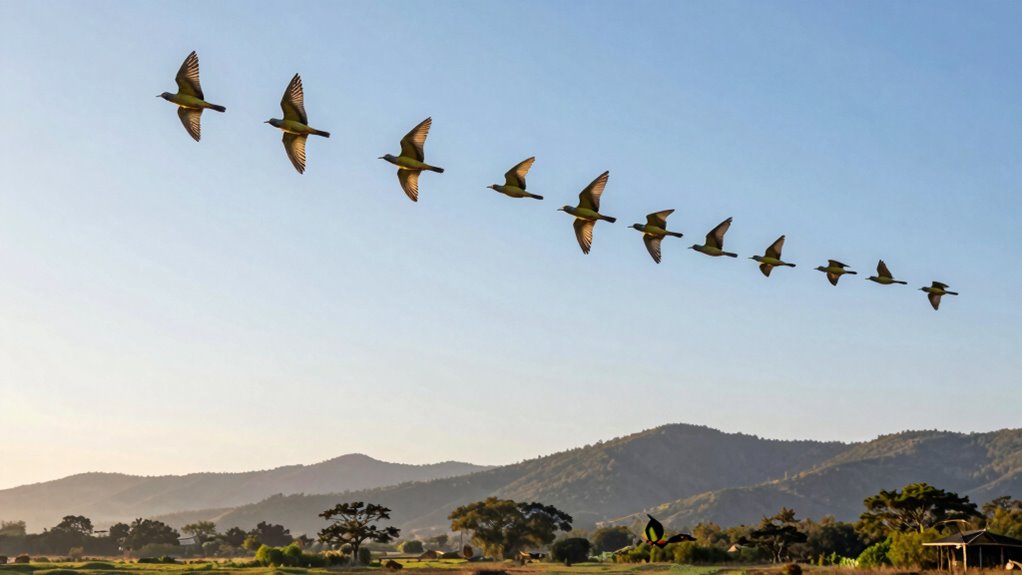

You can understand that birds know when to migrate through their internal biological clocks, which respond to environmental cues like daylight length and temperature. These cues trigger hormonal changes, helping birds time their migration accurately. Their circadian and circannual rhythms stay synchronized with seasonal shifts, guiding their movements. Changes in feather coloration and nesting behaviors also signal migration readiness. If you want to discover more about how this complex system works, keep exploring these fascinating mechanisms.

Get movie nights delivered free with Prime
- Fast, free delivery on millions of items
- Prime Video, Amazon Music and more included
- Member-only deals all year
Key Takeaways
- Birds rely on environmental cues like daylight length and temperature to trigger hormonal changes signaling migration.
- Internal biological clocks, such as circadian and circannual rhythms, help birds time their migration accurately.
- Changes in feather coloration indicate readiness for migration and are hormonally driven by environmental signals.
- Resource availability and nesting conditions influence migration timing, ensuring birds leave at optimal times.
- Adaptation to climate variations allows birds to adjust migration schedules based on environmental cues.
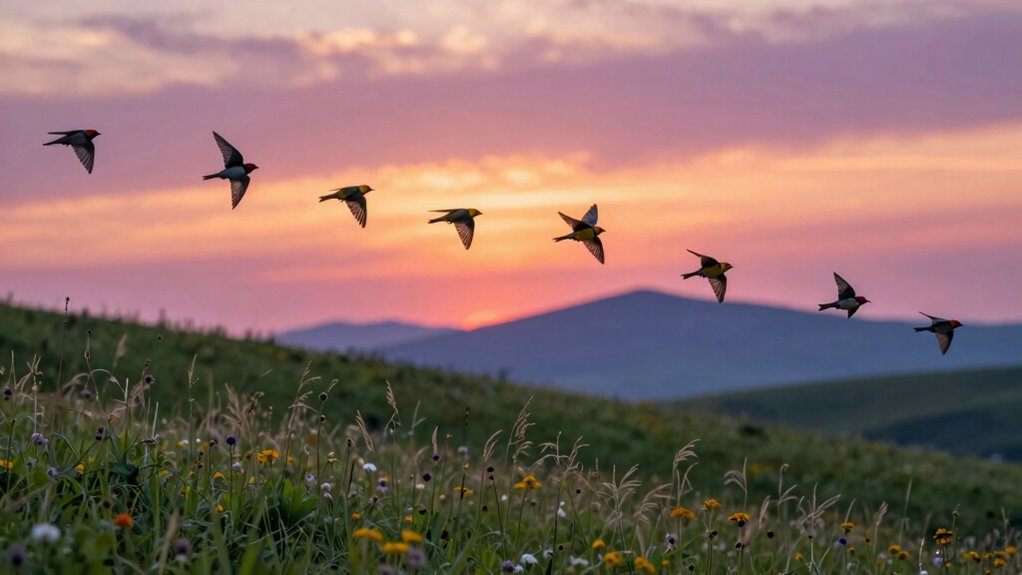
Every year, billions of birds set out on incredible journeys, migrating thousands of miles between their breeding and wintering grounds. You might wonder how they know precisely when to start these long migrations. The answer lies in a complex interplay of environmental cues, internal biological clocks, and physical features like feather coloration and nesting behaviors. These elements work together, helping birds navigate seasonal changes and prepare for their upcoming journeys.
Feather coloration plays a significant role in migration timing. Many species develop brighter, more vibrant plumage during the breeding season, signaling to other birds that they’re ready to mate and, consequently, ready to migrate. As migration approaches, the color of their feathers often shifts or dulls, indicating a shift into a non-breeding phase. Bright feathers can also serve as visual cues for other birds, reinforcing social bonds and signaling readiness to travel. This change in feather coloration is often triggered by hormonal shifts, which respond to environmental cues like daylight length and temperature. These cues help birds synchronize their migration timing with ideal conditions, guaranteeing they’re not traveling too early or too late. Additionally, some species use photoperiodism to fine-tune their internal clocks and better align migration with seasonal changes. Understanding how biological clocks and environmental factors interact gives insight into their precise timing. A deeper understanding of environmental cues reveals how sensitive and adaptable birds are to their surroundings, ensuring successful migration even amidst changing climates.
Bright feather colors signal readiness to migrate and mate, shifting as hormonal cues respond to environmental changes.
Nesting behaviors are equally vital in determining migration timing. Many birds rely on the successful completion of nesting activities to decide when to migrate. Once they’ve raised their young and the nesting season concludes, they prepare for departure. This nesting behavior is closely tied to environmental factors such as food availability and weather patterns. Birds instinctively know when the season is ending based on these cues, prompting them to migrate before resources become scarce. Additionally, internal circadian and circannual rhythms, biological clocks that regulate seasonal behaviors, coordinate with nesting behaviors to provide a precise schedule for migration. These rhythms are sensitive to changes in daylight, helping you stay in sync with the seasons. Some species also adjust their migration timing based on climatic variations, ensuring they adapt to changing environmental conditions. Recognizing these intricate mechanisms helps explain how birds manage to time their migrations so accurately year after year.
As an affiliate, we earn on qualifying purchases.
Frequently Asked Questions
How Do Young Birds Learn Migration Routes?
You might wonder how young birds learn migration routes. They rely on a mix of genetic memory and environmental cues. Genetic memory provides innate knowledge of migration paths, while environmental cues like the sun, stars, magnetic fields, and landmarks guide them during their journey. As they migrate, they also learn from older birds, refining their routes over time. This combination helps guarantee successful migration for their survival.
Do All Bird Species Migrate?
Not all bird species migrate; some are true homebodies, while others chase the seasons like a well-tuned compass. You see, migration patterns vary widely, guided by instinct, weather, and food sources. Birds rely on their innate sense of orientation, using the sun, stars, and Earth’s magnetic field to navigate. So, whether they take to the skies or stay grounded, each bird follows its unique journey, driven by survival’s silent call.
How Do Birds Navigate Across Oceans?
You might wonder how birds cross vast oceans, and it’s fascinating. They rely on their avian senses, especially magnetic navigation, to find their way. Birds detect Earth’s magnetic field using specialized sensors in their eyes and brains, helping them orient and stay on course during long migrations. This natural magnetic sense guides them across open waters, ensuring they reach their destinations with remarkable accuracy.
What Triggers Birds to Start Migrating Each Year?
You might think birds have a secret alarm clock, but it’s really all about environmental cues. Migration timing is triggered by subtle changes like daylight length, temperature shifts, and food availability. Ironically, while they seem instinctively perfect, these cues guide their journey, ensuring they leave just in time. So, nature’s own calendar, set by environmental cues, keeps birds on schedule, even if we don’t notice it happening.
Can Weather Changes Affect Migration Timing?
Weather changes can definitely affect migration timing. You’ll notice that shifts in climate patterns and atmospheric cues, like temperature drops or wind patterns, signal birds it’s time to move. When weather varies unexpectedly, birds may start migrating earlier or later than usual to adapt. These environmental signals help them synchronize their journeys with best conditions, ensuring they find food and suitable habitats along the way.
As an affiliate, we earn on qualifying purchases.
Conclusion
So, next time you see a flock taking flight, ask yourself—how do they know it’s time to go? Their remarkable instincts guide them across vast skies, following ancient cues from the sun, stars, and Earth’s magnetic field. You might wonder what it feels like to rely on such precise signals, but for birds, migration is a natural rhythm. Isn’t it amazing how nature’s signals lead them home, year after year?
As an affiliate, we earn on qualifying purchases.
bird feeder for migration seasons
As an affiliate, we earn on qualifying purchases.
As an affiliate, we earn on qualifying purchases.
Halloween Picks
halloween
As an affiliate, we earn on qualifying purchases.